|
09:00-
|
On-Site Room and Zoom Webinar Open
(KSRP Media Centre, Tele-Lecture 1F, Room 1 / Zoom Webinar P1)
|
|
09:10-09:20
|
Opening Ceremony
[MC: Dr. Yves LEPAGE]
Welcome address: Dr. Shigeru FUJIMURA, Professor
(Dean, Graduate School of Information, Production and Systems, Waseda University, Japan)
Greetings from FAIS: Dr. Morio MATSUNAGA, President
(Foundation for the Advancement of Industry Science and Technology, Japan)
|
|
9:20-9:30
|
PAUSE
|
|
09:30-10:30
Show/Hide
|
Keynote Speech 1
[Chair: Dr. Toshihiko YOSHIMASU]
Title : "High temperature resistant packaging technology for SiC power devices"
Dr. Kohei TATSUMI, Professor
(Graduate School of Information, Production and Systems, Waseda University, Japan)
Speech Overview:
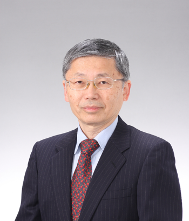
There is an increasing expectation to incorporate silicon carbide (SiC) as inverter power modules for hybrid electric vehicles (HEVs) and electric vehicles (EVs). In order to maximize the performance of SiC devices, new packaging technologies that can realize high-temperature heat resistance by replacing solder joint or Al wire bonding, have been strongly demanded. In order to meet these demands, various new interconnection technologies have been developed. Here the latest technologies will be introduced, focusing on the technologies of Nickel micro-plating bonding (NMPB) and Nickel nano-particle bonding. A newly developed SiC power module with using these technologies showed stable I-V characteristics over 250℃ and lower switching loss. The reliability of the modules was confirmed by TCTs and power cycle tests.
Biography:
Kohei Tatsumi received the B.Eng. and the M.Sc. degrees in metallurgical engineering from Waseda University Tokyo, Japan, in 1976 and in 1978, respectively, and the Dr. Ing. Degree in physical metallurgy from Technische Hochschule Aachen, Germany in 1983. He joined Nippon Steel Corporation, Japan in 1983, where he became a general manager of advanced material research division in 2001 and a member of boards of Nippon Steel Materials in 2008 respectively, and temporarily worked for Tokyo Institute of Technology as a lecturer in production engineering during 2002-2003. Since 2010 he has been a professor at graduate school of Information, Production, and Systems, Waseda University. From 2013 to 2018, he was a theme leader of SIP (Strategic Innovation Creation Program) Next generation power electronics/research and development of SiC heat resistant module packaging technology for automobiles. He was a recipient of the best prize of Nikkei Power Electronics Award 2019.
|
|
10:30-11:30
Show/Hide
|
Invited Talk 1 -- Thematic Session "Next-generation semiconductors and integrated circuits and their design technologies"
[Chair: Dr. Toshihiko YOSHIMASU]
Title: "Advantages of gallium nitride (GaN) devices and its application to microwave and millimeter wave circuits"
Dr. Shinji HARA, Designated Professor
(IMaSS, Nagoya University, Japan)
Speech Overview:
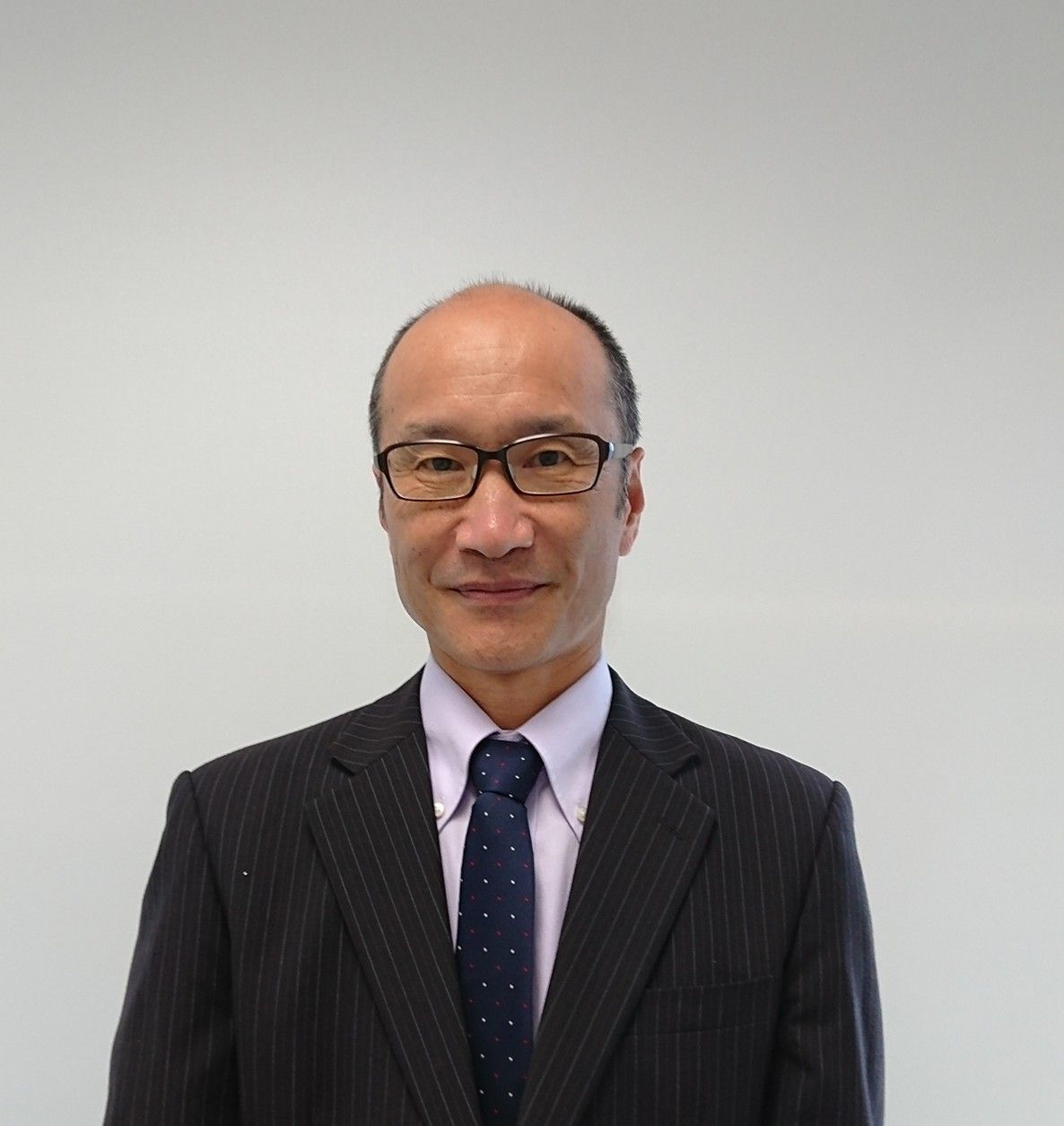
GaN HEMTs are widely used for microwave high power amplifier applications. In this speech, the reason why GaN HEMTs are advantageous for microwave power amplifiers will be explained from properties of GaN and microwave power amplifier basics. Then, the new design methodologies, matching circuit-less power amplifier, to realize very high efficiency power amplifiers for energy applications will be introduced together with some design results. Besides the efficiency, the linearity is very important for wireless communication systems, which is in a trade-off relationship with the efficiency. Especially, modern and future systems require very high linearity to power amplifiers. Some approaches to solve this issue will be introduced. Finally, the problem of GaN HEMT which is widely used now and the promising solution for that will be introduced.
Biography:
Shinji Hara received B.E., M.E., and Dr. Eng. degrees in electrical engineering from Waseda University, in 1982, 1984, and 1992, respectively. In 1984, he joined the Tokyo Research Laboratories of Sharp Corporation. In 1986, he joined ATR Optical and Radio Communications Research Laboratories, where he was engaged in research on circuit design technology for highly integrated GaAs MMICs and realized microwave active inductors and circulators. In 1989, he returned to Sharp Corporation Central Research Laboratories, where he was engaged in research and development on GaAs MMICs for mobile communication applications. From 1992 to 2015, he conducted the development and the business of the GaAs front-end devices for digital cellular and wireless LAN applications in the business unit. In 2016, he joined Airoha Technology Corporation, Taiwan. In 2018, he joined IMaSS, Nagoya University, where he now conducts research for RF circuits focusing on the advantages of GaN devices as a designated professor. He was a co-recipient of the 1991 Microwave Prize granted by the IEEE Microwave Theory and Technique Society.
|
|
11:30-12:00
|
OVERVIEW OF SYMPOSIUM SCHEDULE
Dr. Yves LEPAGE, Professor
(Graduate School of Information, Production and Systems, Waseda University, Japan)
|
|
12:00-13:00
|
LUNCH
|
|
13:00-14:30
|
PARALLEL SESSIONS "A1" AND "B1"
Session A1: Oral presentations
(IPS S102, Zoom meeting A)
Show/Hide
Session Chairs: Professor Yaping DAI (Beijing Institute of Technology, China) and Professor Takeshi IKENAGA (Waseda University, Japan)
A1-1 (3023):
A dual-channel underwater image enhancement based on feature fusion
Tianjiao Ma, Xinwei Xue
(Dalian Universty of Technology)
A1-2 (341):
Cascaded Spectral-Spatial Cooperative Vision Transformer for Hyperspectral Image Classification
Weilian Zhou, Sei-Ichiro Kamata
(Graduate School of Information, Production and Systems, Waseda University)
A1-3 (8337):
Context-Based 2.5D Pulmonary Nodule Segmentation Network
Gaoyu Wang, Xinwei Xue
(Dailan University of Technology)
A1-4 (561):
Fundus Age Estimation for Aging Index Using Sparse Hypergraph Networks
Ai Kimura, Sei-Ichiro Kamata
(Graduate School of Information, Production and Systems, Waseda University)
Session B1: Posters presentations of Colleges of Technology
(IPS N160, Zoom meeting B)
Show/Hide
Session Chairs: Professor Kenji HASHIMOTO (Waseda University, Japan) and Professor Shintaro YAMASAKI (Waseda University, Japan)
B1-1 (2900):
Practical Verification of Text-To-Speech System Using Finger-Tracing for the Visually Impaired
(Zoom meeting B1-1)
Shota Hazama1, Kimiyasu Kiyota1, Tatsuhide Kimura2
(1NIT, Kumamoto College,
2Pothos Corporation)
B1-2 (4690):
Distributed Compressed Video Sensing based on Convolutional Sparse Coding using a large number of keyframes
Yosuke Higuchi, Yoshimitsu Kuroki
(National Institute of Technology, Kurume College)
B1-3 (4941):
Experimental and Simulated Investigation on Underexpanded Supersonic Rectangular Impinging Jet
Takahiro Koge, Tsuyoshi Yasunobu, Xin Jiang, Masaki Shimazu
(National Institute of Technology, Kitakyushu College)
B1-4 (5094):
Distributed Compressed Video Sensing based on Convolutional Sparse Coding using Fourier Measurement Matrix and L1 Fidelity Term
Takuro Eguchi, Hayata Morisaki, Yoshimitsu Kuroki
(National Institute of Technology, Kurume College)
B1-5 (6706):
Development of Synchronous Multisensor Data Storage System for Driving Behavior Analysis
Daichi Arai2, Shogo Motoyama2, Kosei Nojiri2, Hirofumi Ohtsuka2, Etsuo Horikawa1
(1Fukuoka International University of Health and Welfare,
2National Institute of Technology, Kumamoto College)
B1-6 (1994):
Analysis of the Shape and Flow State of Venturi Tube on Fine Bubble Generation
Ryuki Kamiyama, Xin Jiang, Tsuyoshi Yasunobu, Masaki Shimazu
(National Institute of Technology, Kitakyushu College)
|
|
14:00-16:00
|
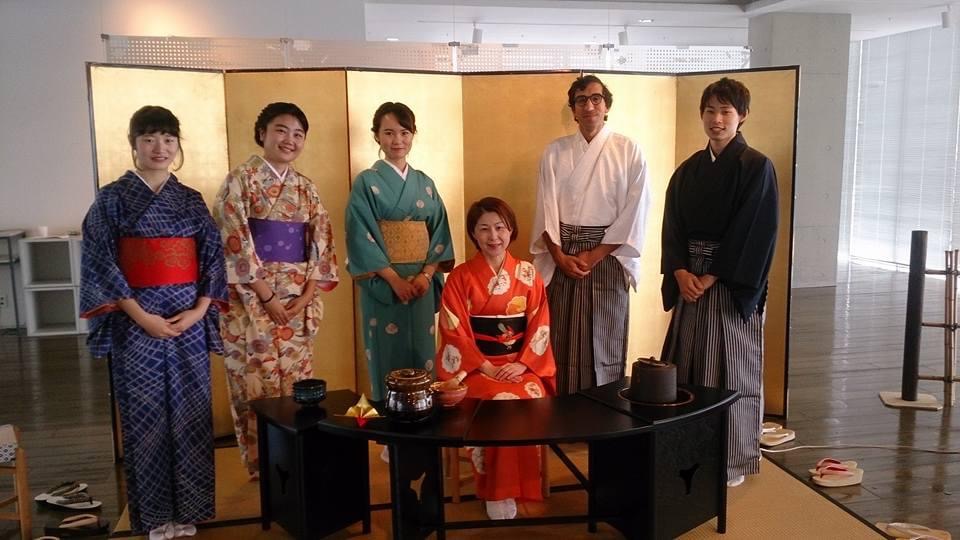
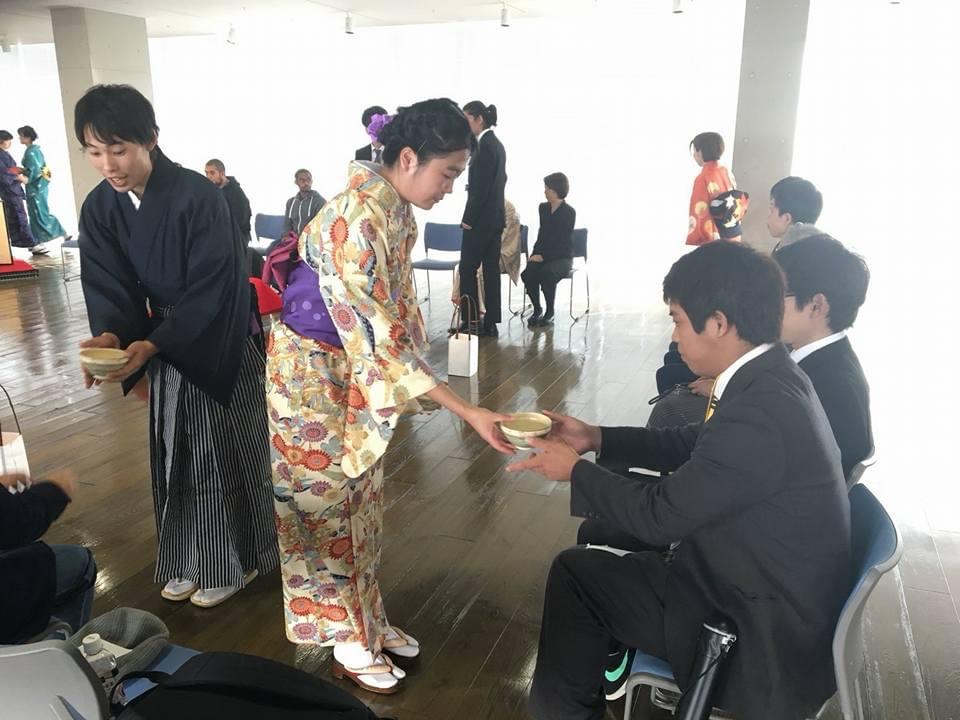
CULTURAL EVENT: JAPANESE TEA CEREMONY
Team Sado Waseda and FORSNET
(Student lobby; outdoor if wheather permits)
Show/Hide
Green tea and Japanese pastry for attendees who received a tea ceremony ticket, and for everybody to watch.
|
|
14:30-14:45
|
PAUSE
|
|
14:45-16:15
|
PARALLEL SESSIONS "A2" AND "B2"
Session A2: Oral presentations
(IPS S102, Zoom meeting A)
Show/Hide
Session Chairs: Professor Takafumi MATSUMARU (Waseda University, Japan) and Professor Jun WU (Waseda University, Japan)
A2-1 (1986):
Edge Encoded Transformer to Solve Capacitated Vehicle Routing Problem with Reinforcement Learning
Getu Fellek, Goytom Gebreyesus, Ahmed Farid, Shigeru Fujimura, Osamu Yoshie
(Waseda University)
A2-2 (1842):
ShoppingpARtners: A Social Shopping System for Remotely Distributed Partners Using Augmented Reality
Shihui Xu, Shigeru Fujimura
(Waseda University)
A2-3 (6720):
Combining Autonomous Mobile Robots (AMRs) to Develop a Dynamic Stochastic Routing System in the Warehouse
Shiyue Hu, Shigeru Fujimura
(Waseda University)
A2-4 (5173):
An Efficient Network Immunization Strategy with Graph Neural Network
Tiezheng Mao, Osamu Yoshie
(Waseda University)
Session B2: Oral presentations
(IPS S153, Zoom meeting B)
Show/Hide
Session Chairs: Professor Makoto TSUBOKAWA (Waseda University, Japan) and Professor Kenji UEDA (Waseda University, Japan)
B2-1 (3236):
Non-reciprocal Loss Shift Membrane Optical Isolators on SiO2/Si Substrate
Zhao Chen, Yibing Wu, Takaaki Kakitsuka
(Waseda University)
B2-2 (8820):
Design of a silicon photonic crystal slow-light waveguide with a wide low-dispersion bandwidth
Deji Li, Kiyoto Takahata
(Graduate School of Information, Production and Systems, Waseda University)
B2-3 (9731):
Day-ahead Microgrid Dispatch Optimization based on Demand Responding via Improved Ring Topology Particle Swarm Optimization
Sicheng Hou, Shigeru Fujimura
(Graduate School of Information, Production and Systems, Waseda University)
B2-4 (5359):
Modified Convolutional Networks for Optimal Path Planning
Yuan Huang, Xibao Wang, Hee-Hyol Lee
(Graduate School of Information, Production and Systems, Waseda University)
|
|
16:15-16:30
|
PAUSE
|
|
16:30-18:00
|
PARALLEL SESSIONS "A3" AND "B3"
Session A3: Oral presentations
(IPS S102, Zoom meeting A)
Show/Hide
Session Chairs: Professor Takayuki FURUZUKI (Jinglu HU) (Waseda University, Japan) and Professor Kiyoto TAKAHATA (Waseda University, Japan)
A3-1 (5479):
Text-based fine-grained emotion detection by pre-trained language models: challenges and opportunities
Alvin Liang Hao Lu, Mizuho Iwaihara
(Graduate School of Information, Production and Systems, Waseda University)
A3-2 (5776):
Graph Neural Network for Korean sentiment classification
Thanh Vu Dang2, Le Hoang Anh2, Juhwan Lee2, Gwanghyun Yu2, Jiyong Kim1, Chilwoo Lee3, Jinyoung Kim2
(1Korea Culture and Technology Institute Gwangju Institute of Science and Technology,
2Department of ICT Convergence Systems Engineering, Chonnam National University,
3Department of Computer Engineering, Chonnam National University)
A3-3 (2375):
Sentence-level Weighted Prototypical Network for Multi-label Few-shot Aspect Category Detection
Zeyu Wang, Mizuho Iwaihara
(Waseda University)
A3-4 (8535):
Document Contribution Mapping to the SDGs: A Case Study of Chiang Mai University Web Service
Kittayaporn Chantaranimi, Juggapong Natwichai, Titipat Sukhvibul, Thammanoon Noumanong, Pundaree Sanprom, Natrada Tanakoonthippapha
(Chiang Mai University)
Session B3: Oral presentations
(IPS S153, Zoom meeting B)
Show/Hide
Session Chairs: Professor Takaaki KAKITSUKA (Waseda University, Japan) and Professor Hirofumi SHINOHARA (Waseda University, Japan)
B3-1 (365):
An Ultra-Low Resonance Frequency MEMS Gravimeter With Off-Resonance Closed-Loop Control
Chengzhi Yi, Jun Wu, Tamio Ikehashi
(Graduate School of Information Production and Systems, Waseda University)
B3-2 (3733):
Passive SAW Wireless Sensor for Use in Shielded Narrow Spaces Coupled with Microstrip Lines
Akitoshi Niidome, Hiroyuki Odagawa
(National Institute of Technology (KOSEN), Kumamoto College)
B3-3 (9083):
Emitter-Follower Complementary IGBT for the Inverter Operation by Using the Optimized P-Channel LIGBT on SOI
Zijian Zhang, Masahide Inuishi
(Graduate School of Information, Production and Systems, Waseda University)
B3-4 (9995):
A novel structure design of snap-back free lateral reverse conducting IGBT with low switching power
Suyang Liu, Masahide Inuishi
(Graduate School of Information, Production and Systems, Waseda University)
|
|
09:45-
|
On-Site Room and Zoom Webinar Open
(KSRP Media Centre, Tele-Lecture 1F, Room 1 / Zoom Webinar P2)
|
|
10:00-11:00
Show/Hide
|
Keynote Speech 2
[Chair: Dr. Junko TAKAHASHI]
Title: "A New Paradigm of Computing in Memory: how to design neural network accelerators by using emerging memories"
Dr. Takashi OHSAWA, Professor
(Graduate School of Information, Production and Systems, Waseda University, Japan)
Speech Overview:
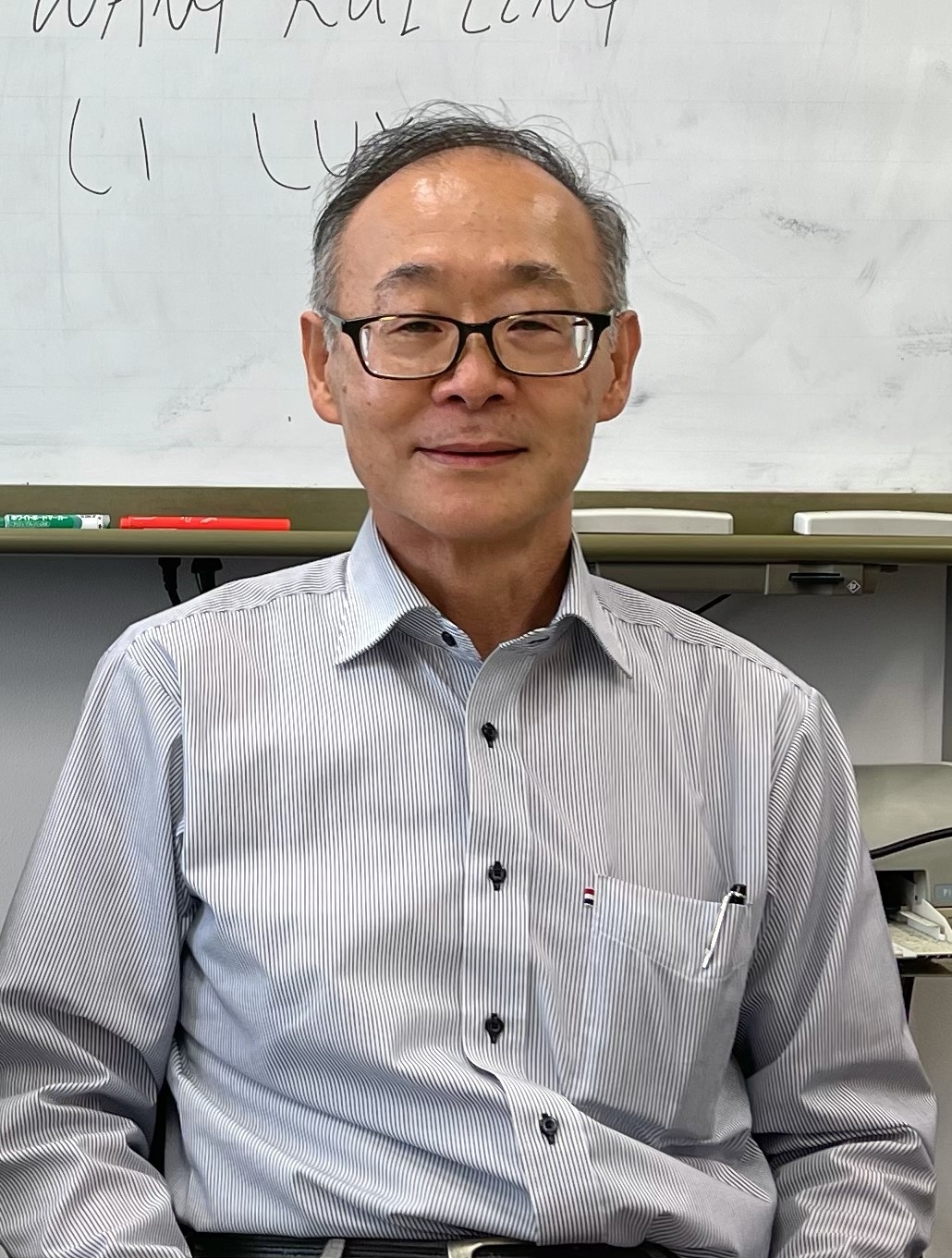
Almost all modern computers are designed based on “von Neumann architecture” which was proposed more than 70 years ago. This unflagging prevalence is attributed to the fact that this architecture lets the system be general-purpose, hardware development be independent from software and memory development be independent from CPU, providing an efficient platform for device and software development. However, as this architecture’s bottleneck grows increasingly apparent as device scaling advances, a new computer paradigm named “in-memory computing (IMC)” is being paid attention in these days. In this new architecture, memories don’t simply store data but also perform some calculations, removing data movement between CPU and memories for reducing the latency and the energy consumption. One of the interesting applications of IMC is seen in neural network inference accelerators using emerging memories. In this paper, key circuit technologies and know-how which are necessary in designing the neural network accelerators will be presented along with several challenges the design must overcome.
Biography:
Takashi Ohsawa received the B.S. and M.S. degrees in physics from Waseda University, Tokyo, Japan, in 1977 and 1979, respectively, and his Ph.D. in electronics engineering from the University of Tsukuba, Tsukuba, Japan, in 2009. He joined Semiconductor Device Engineering Laboratory, Toshiba Corporation, Kawasaki, Japan, in 1982 and participated in the 1Mb DRAM design group. Then, he developed 4Mb and 64Mb DRAMs in the lab. then managed the 256Mb DRAM design department in the DRAM Development Alliance among IBM, Siemens and Toshiba in Burlington, Vermont, USA during 1997-2000. From 2000, he returned to Toshiba for development of a novel capacitorless DRAM cell named floating body cell (FBC). In 2010, he moved to the Center for Spintronics Integrated Systems, Tohoku University, Sendai, Japan as a professor. Since 2017, he has been a professor in Graduate School of Information, Production and Systems, Waseda University, Kitakyushu, Japan.
|
|
11:00-12:00
Show/Hide
|
Invited Talk 2 -- Thematic Session "Next-generation semiconductors and integrated circuits and their design technologies"
[Chair: Dr. Shinichi NISHIZAWA]
Title: "Radiation-Hardened Integrated Circuit Design for Space Applications"
Dr. SinNyoung KIM, Senior Analog Mixed-Signal Designer
(IMEC, Belgium)
Speech Overview:
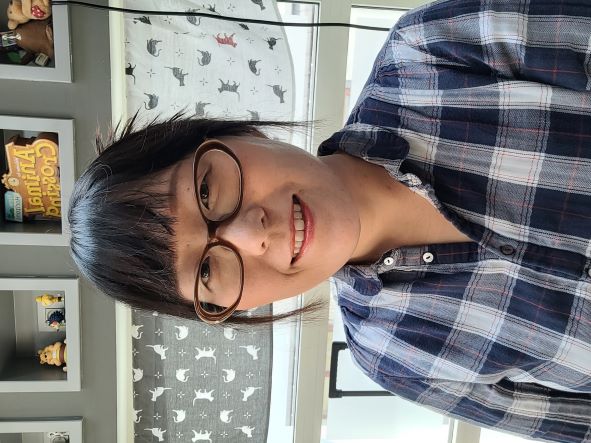
Many countries of the world are on the space race in the 21st century again. Compared to the space race in the 20th century, much more Integrated Circuits (IC) in the semiconductor chips are used for the space applications such as a satellite, space shuttles and so on. One of the important requirements is the radiation-hardened IC design for the space applications. If the particles hit the semiconductor chips, called “radiation strike”, the systems in the chips have malfunctions and failures. In the space, the radiation strikes are stronger and have higher probability than those in the Earth. The radiation-hardened IC design protects the semiconductor chips in the space. This talk introduces the general principle of the radiation-hardened IC design and development of the design platforms for the radiation-hardened chips.
Biography:
SinNyoung Kim received M.S.(2009) degree from Hanyang University and Ph.D.(2014) degrees from Kyoto University.
She studied the analysis and design of radiation-hardened phase-locked loop in Kyoto University.
In Toshiba Electronic Devices & Storage Corporation, she worked as an analog mixed-signal designer (2014 - 2017).
She is currently working in IMEC and in charge of radiation-hardened PLL design in several European space projects.
|
12:00-13:00 |
LUNCH |
|---|
|
13:00-14:30
|
PARALLEL SESSIONS "C1" AND "D1"
Session C1: Thematic Session "Next-generation semiconductors and integrated circuits and their design technologies"
(IPS S102, Zoom meeting C)
Show/Hide
Session Chairs: Dr. SinNyoung KIM (IMEC, Belgium) and Assistant Professor Shinichi NISHIZAWA (Waseda University, Japan)
C1-1 (3195):
A Low-Phase-Noise and Low-Power LC-VCO IC with a Novel Feedback Circuit in 40-nm CMOS SOI
Ding Fazhan, Fang Mengchu, Toshihiko Yoshimasu
(Waseda University)
C1-2 (3998):
Double Size and Quadruple Size Transistor SRAM Physical Unclonable Functions Utilizing Hot Carrier Injection for Stability Reinforcement
Shufan Xu, Kunyang Liu, Hirofumi Shinohara
(Waseda University)
C1-3 (8958):
Spin-Transfer Torque Magnetic Tunnel Junction Model for Stochastic Circuit Simulations Based on Fokker-Planck Equation
Haoyan Liu, Takashi Ohsawa
(Waseda University)
Session D1: Oral presentations
(IPS S153, Zoom meeting D)
Show/Hide
Session Chairs: Professor Jun KAMEOKA (Waseda University, Japan) and Professor Osamu YOSHIE (Waseda University, Japan)
D1-1 (1125):
When Digital Twin Meets Fuzz Testing for Autonomous Vehicles: Time-Continuous Scenario-Coverable Safety Evaluation
Yang Hong, Jun Wu
(Graduate School of Information, Production and Systems, Waseda University)
D1-2 (1606):
BNMS: Blockchain and NFT Empowered On-Demand Medicine Knowledge Sharing for EHRs in E-health
Guozhi Hao, Jun Wu
(Waseda University)
D1-3 (9904):
Consortium Blockchain-based Secure and Efficient Knowledge Trading in Edge-AI Enabled IoT
Xi Lin
(Shanghai Jiao Tong University)
D1-4 (1721):
GenICR: Generative Imbalance Class Reconstruction in Federated Edge Learning against Data Poisoning Attacks
Gaolei Li1, Jun Wu2
(1Shanghai Jiao Tong University,
2Waseda University)
|
|
14:30-14:45
|
PAUSE
|
|
14:45-16:15
|
PARALLEL SESSIONS "C2" AND "D2"
Session C2: Oral presentations
(IPS S102, Zoom meeting C)
Show/Hide
Session Chairs: Professor Juggapong NATWICHAI (Chiang Mai University, Thailand) and Professor Mizuho IWAIHARA (Waseda University, Japan)
C2-1 (7678):
A Study in the Generation of Multilingually Aligned Middle Sentences
Matthew Eget, Yang Xuchen, Xiao Haozhe, Yves Lepage
(Graduate School of Information Production and Systems, Waseda University)
C2-2 (6275):
Fruit Quality Classification segmented to superpixel or image patch using Graph Neural Networks with Learnable Positional Embedding
Jihun Bae, Gwanghyun Yu, Juhwan Lee, Le Hoang Anh, Jinyoung Kim
(Department of ICT Convergence System Engineering, Chonnam National University)
C2-3 (8389):
Monophonic Music Generation Using Monte-Carlo Tree Search
Xiao Fu, Hangyu Deng, Xin Yuan, Jinglu Hu
(Graduate School of Information Production and Systems, Waseda University)
C2-4 (8248):
Text-Guided High-Resolution Face Image Generation from Multiple Sentence Descriptions
Bin Chen, Hao Wang
(Shanghai University)
Session D2: Oral presentations
(IPS S153, Zoom meeting D)
Show/Hide
Session Chairs: Professor Sei-Ichiro KAMATA (Waseda University, Japan) and Assistant Professor Yuya IEIRI (Waseda University, Japan)
D2-1 (2311):
Contrastive-Alternative Learning for Joint Detection and Enhancement in Low-Light Scenes
Jia He, Xinwei Xue
(Dalian University of Technology)
D2-2 (1545):
Semi-supervised Attention based Merging Network with Hybrid Dilated Convolution Module for Few-shot HDR Video Reconstruction
Fengshan Zhao2, Qin Liu1, Takeshi Ikenaga2
(1Nanjing University,
2Graduate School of Information, Production and Systems, Waseda University)
D2-3 (3270):
Extract, Purify, and Recombine: Delving into High-Quality Underwater Object Detection
Yuechao Gao, Xinwei Xue
(Dalian University of Technology)
D2-4 (3247):
Spatial-temporal Potential Joint Restore and Modeling Matching based Multi-view 3D Spiker Pose Estimation and Refinement for Volleyball Analysis
Yanchao Liu, Takeshi Ikenaga
(Waseda University)
|
|
16:15-17:00
|
PAUSE AND JURY FOR SESSION BEST PRESENTATION AWARDS
|
|
17:00-18:00
|
CLOSING CEREMONY / ANNOUNCEMENT OF SESSION BEST PRESENTATION AWARDS
(S104 and Zoom webinar)
|