|
09:00-
|
On-Site Room and Zoom Webinar Open
(KSRP Media Centre, Tele-Lecture 1F, Room 1 / Zoom Webinar P1)
|
|
09:10-09:20
|
Opening Ceremony
[MC: Dr. Yves LEPAGE]
Dr. Shigeru FUJIMURA, Professor
(Dean, Graduate School of Information, Production and Systems, Waseda University, Japan)
|
|
9:20-9:30
|
PAUSE
|
|
09:30-10:30
Show/Hide
|
Keynote Speech 1
[Chair: Dr. Toshihiko YOSHIMASU]
Title : "Wonder of Latch Circuits: from Memory to Information Security"
Dr. Hirofumi SHINOHARA, Prof.
(Graduate School of Information, Production and Systems, Waseda University, Japan)
Speech Overview:
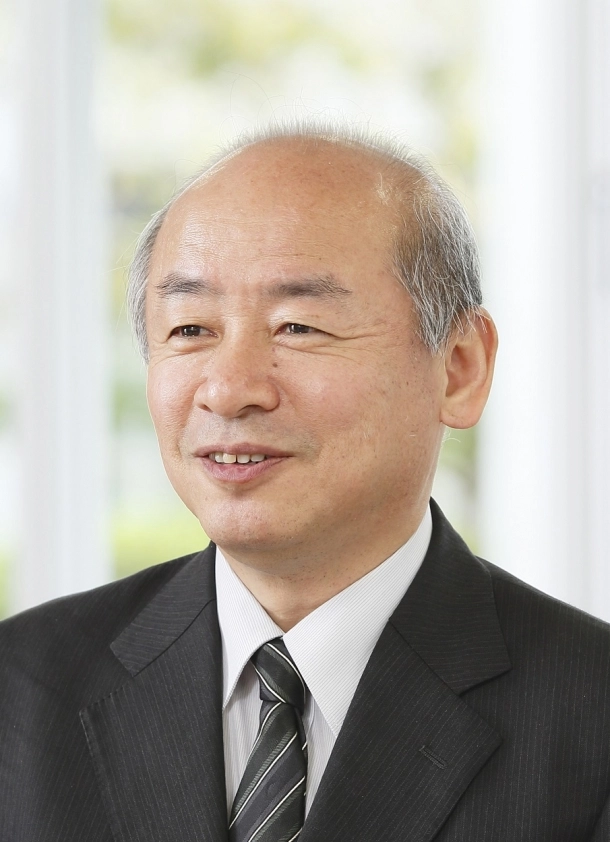
Latch circuit holds data 1 or 0. It has been used as a basic cell of SRAM (Static Random Access Memory). More than 50% of transistors are occupied by SRAM cache memory in micro-processors. You might have a question: “Which data would it hold after power-up without data write operation?” The answer is random. This uncertainty brings a new value of security to the latch circuit as a root of trust. If it is statically random like a fingerprint, it is a PUF (Physical Unclonable Function) which is used for secure key generation. Or if it is dynamically random like a dice, it is a TRNG (True Random Number Generator) used in many aspects of security system.
In this talk, after providing basics of latch, PUF and TRNG, their application to information security and activities in industry will be presented. Then state of the art research works including ours and future challenges will be addressed.
Biography:
Hirofumi Shinohara received B.S. and M.S. degrees in electrical engineering and Ph.D. degree in informatics from Kyoto University, in 1976, 1978 and 2008, respectively.
In 1978, he joined the LSI Laboratory of Mitsubishi Electric (currently Renesas Electronics), where he was involved in research and development of SRAMs, memory compilers, logic building blocks. From 2009 to 2015 he directed joint research projects between industry and academy in Semiconductor Technology Research Academic Center (STARC).
Since 2015 he has been a professor of Graduate School of Information, Production and Systems (IPS), Waseda University. His current research interests include energy efficient random circuits for security such as PUF, TRNG; and its application to stochastic computing.
Dr. Shinohara served on the ITPC of the IEEE ISSCC from 2017 to 2021, and has been serving on the TPC of the IEEE VLSI-DAT since 2016.
|
|
10:30-11:30
Show/Hide
|
Invited Talk 1
[Chair: Dr. Toshihiko YOSHIMASU]
Title: "Multi-Mode Stereo Vision Based Intelligent Sensing and Cognitive Technology"
Dr. Wei ZHONG, Associate Professor
(International School of Information Science & Engineering, Dalian University of Technology, China)
Speech Overview:

This speech mainly focuses on the computer vision and image processing technology.
We construct a research platform for multi-mode stereo vision based intelligent sensing and cognitive technology, including the visible and IR lens-sensor modules, key algorithms, and the hardware-software co-design.
In the algorithm part, I will first give a brief introduction about the image enhancement technology, including defog, derain, low-light enhancement, muiti-mode image registration and image fusion, to obtain high image quality.
Then, I will introduce the stereo vision technology, including visible and IR calibration, visble-IR cross calibration, rapid image rectification and sub-pixel stereo matching algorithms, to generate accurate depth map and 3D point cloud.
Based on the high image quality and precise 3D point cloud, I will then introduce the obstacle detection, target recognition, drivable space detection, and SLAM algorithms, for vehicle and robot real autonomous driving application.
Combined with the camera module and embedded system development, the above technologys have been integrated into the real camera devices and adapted by Baidu Apollo Plan for commercial autonomous driving vehicles in China.
Biography:
Dr. Wei Zhong received the B.S. degree from Dalian University of Technology, Dalian, China, in 2008, the M.S. and Ph.D. degrees from Waseda University, Tokyo, Japan, in 2010 and 2014, respectively. He served as a Research Assistant in the Information, Production and Systems Research Center of Waseda University, Kitakyushu, Japan, from 2010 to 2011, an Associate Specialist in the Central Research Laboratory of Ricoh Company, Tokyo, Japan, from 2011 to 2014, a Chief Designer and Director of the Institute of Image Processing Technology in the State Key Laboratory of Digital Multimedia Technology, Hisense Group,Qingdao, China, from 2014 to 2018. From 2015 to 2017, he also served as a Postdoctoral Researcher in the University of Science and Technology of China, Hefei, China. He is currently an Associate Professor in the International School of Information Science and Engineering, Dalian University of Technology, Dalian, China. His research interests include several aspects of computer vision and image processing algorithms, VLSI design automation, networks on chips and hardware-software co-design of embedded systems.
|
|
11:30-12:00
|
OVERVIEW OF SYMPOSIUM SCHEDULE
Dr. Yves LEPAGE, Professor
(Graduate School of Information, Production and Systems, Waseda University, Japan)
|
|
12:00-13:00
|
LUNCH
|
|
13:00-14:30
|
PARALLEL SESSIONS "A1" AND "B1"
Session A1: Oral presentations
(Zoom meeting A)
Show/Hide
Session Chairs: Professor Mizuho IWAIHARA (Waseda University, Japan) and Professor Takafumi MATSUMARU (Waseda University, Japan)
A1-1:
Abstract-Meaning Representation with Pre-trained Models for Sentences in the Computational Linguistics Domain
Ming Zhao, Yaling Wang and Yves Lepage
(Waseda University)
A1-2:
Coarse-To-Fine Contour and Mask Collaborative Network for Accurate Biomedical Image Segmentation
Hongtao Jin and Jinglu Hu
(Waseda University)
A1-3:
Data augmentation using sentence analogy for text morphing
Zhicheng Pan and Yves Lepage
(Waseda University)
A1-4:
Privacy-Preserving Domain Adaptation for Image Classification
Hongmiao Yan, Lin Yao and Zhenyu Chen
(Dalian University of Technology)
A1-5:
On Initial CNN parameters using convolutional sparse filters
Satoshi Yoda, Akito Narahara and Yoshimitsu Kuroki
(National Institute of Technology, Kurume College)
A1-6:
Extraction and comparison of analogical cluster sizes in different languages for different vocabulary sizes
Yingxue Mei, Rashel Fam and Yves Lepage
(Waseda University)
A1-7:
An improved drowsy driving detection method by removing abnormality using iForest with DBSCAN
Qiushi Feng, Shin-nyeong Heo and Hee-hyol Lee
(Waseda University)
Session B1: Posters, demos, videos
(Zoom meeting B)
Show/Hide
Session Chairs: Professor Osamu YOSHIE (Waseda University, Japan) and Professor Jun WU (Waseda University, Japan)
B1-1:
Interface modes in topologically protected edge states using hourglass lattice based metastructures
Vivek Gupta, Harsh Mirani and Bishakh Bhattacharya
(Indian Institute of Technology Kanpur)
B1-2:
Skin Lesion Classification Using Weakly-Supervised Fine-Grained Method
Xi Xue and Sei-Ichiro Kamata
(Waseda University)
B1-3:
STAR-Net: Spatial-Temporal Attention Residual Network for Video Deraining
Wei Zhong, Xuefeng Zhang and Long Ma
(Dalian University of Technology)
B1-4:
Efficient RGB-D Salient Object Detection
Xiao Wang, Kaixuan Zhang, Yidan Sun, Runyu Wang and Miao Zhang
(Dalian University of Technology)
B1-5:
Patch-Based Spectral-Spatial Correlative Restriction for Hyperspectral Image Classification
Weilian Zhou and Sei-Ichiro Kamata
(Waseda University)
B1-6:
Bi-level Probabilistic Feature Learning for Deformable Image Registration
Risheng Liu, Zi Li and Xin Fan
(Dalian University of Technology)
|
|
14:30-14:45
|
PAUSE
|
|
14:45-16:15
|
PARALLEL SESSIONS "A2" AND "B2"
Session A2: Oral presentations
(Zoom meeting A)
Show/Hide
Session Chairs: Professor Takayuki FURUZUKI (Waseda University, Japan) and Professor Makoto TSUBOKAWA (Waseda University, Japan)
A2-1:
Fighting Covid-19: AR system to prevent the spread of the virus at Shopping malls
Like Wu and Jiro Tanaka
(Waseda University)
A2-2:
Learning Scene Structure Guidance via Cross-Task Knowledge Transfer for Single Depth Super-Resolution
Baoli Sun, Xinchen Ye, Zhihui Wang, Haojie Li and Rui Xu
(Dalian University of Technology)
A2-3:
3D Localization of Floor Hazards Using Region Proposals & Siamese Neural Networks
Ahmed Farid and Osamu Yoshie
(Waseda University)
A2-4:
Structured information learning based Neural Network for 2D Pose Estimation with Monocular Camera
Zhiwen Zhang and Takeshi Ikenaga
(Waseda University)
A2-5:
Design and Development of a Multi-Modal Data Acquisition Device for Crop Monitoring
Mahendra Kumar Gohil, Anirudha Bhattacharjee and Bishakh Bhattacharya
(Indian Institute of Technology Kanpur)
A2-6:
3D Personalized Avatar in Augmented Reality to Increase the Motivation of Walking Exercise
Sungjae Yoo and Jiro Tanaka
(Waseda University)
A2-7:
PMBANet: Progressive Multi-Branch Aggregation Network for Scene Depth Super-Resolution
Xinchen Ye, Baoli Sun, Zhihui Wang, Haojie Li and Rui Xu
(Dalian University of Technology)
Session B2: Oral presentations
(Zoom meeting B)
Show/Hide
Session Chairs: Professor Shinji KIMURA (Waseda University, Japan) and Professor Tamio IKEHASHI (Waseda University, Japan)
B2-1:
A Novel Loadless 4T SRAM Sustaining Data by Gate Leakage Current
Yihan Zhu and Takashi Ohsawa
(Waseda University)
B2-2:
Directly-Modulated Distributed Reflector Lasers Using Detuned-Loading Effect for Extended Optical Fiber Transmission Reach
Yuan Luo, Zicong Han and Takaaki Kakitsuka
(Waseda University)
B2-3:
Dispersion engineering of kagome lattice Si photonic crystal waveguide
Deji Li and Kiyoto Takahata
(Waseda University)
B2-4:
The coupling dependence of protection operation by applying optical MIMO to SDM ring network
Jing Jiang and Makoto Tsubokawa
(Waseda University)
B2-5:
Magnetic Tunnel Junctions SPICE Model Based on Switching Probability
Haoyan Liu and Takashi Ohsawa
(Waseda University)
B2-6:
Design of a photonic integrated circuit for product-sum computing
Ruikang Luo and Kiyoto Takahata
(Waseda University)
B2-7:
InGaAs-Based Photodetectors with Spatial Carrier-Transport for THz-Wave Generation
Wenbiao Li, Xun Wu, Daonan Xie and Takaaki Kakitsuka
(Waseda University)
|
|
16:15-16:30
|
PAUSE
|
|
16:30-18:00
|
PARALLEL SESSIONS "A3" AND "B3"
Session A3: Oral presentations
(Zoom meeting A)
Show/Hide
Session Chairs: Professor Harutoshi OGAI (Waseda University, Japan) and Professor Hiroshi INUJIMA (Waseda University, Japan)
A3-1:
An Experimental Paradigm to study Trust in Child-Robot Interaction
Ratnangshu Das, Anirudha Bhattacharjee and Bishakh Bhattacharya
(Indian Institute of Technology Kanpur)
A3-2:
Study of Detecting Fatigue State by Using Portable NIRS for Walking Asistance Device
Yunfan Li, Yukai Gong and Eiichiro Tanaka
(Waseda University)
A3-3:
Ultrasensitive and Reliable Organic Field-Effect Transistors-Based Biosensors in Early Liver Cancer Diagnosis
Chenfang Sun, Shanshan Cheng and Wenping Hu
(Tianjin University)
A3-4:
An emotion recognition method for walking assistance based on machine learning
Yongxin Wei, Yukai Gong and Eiichiro Tanaka
(Waseda University)
A3-5:
The Dynamic Path Planning for Outdoor Robot to Move in Pedestrian Setting
Wanda Guo and Takafumi Matsumaru
(Waseda University)
A3-6:
Development of a safe and compact lower limb device for motion guidance and assistance using stepper motor
Yifan Fang, Bingkai Hou and Eiichiro Tanaka
(Waseda University)
A3-7:
A Real-time Path Planning Algorithm in Dynamic Narrow Environments
Yuan Huang and Hee-hyol Lee
(Waseda University)
Session B3: Posters, demos, videos
(Zoom meeting B)
Show/Hide
Session Chairs: Professor Takeshi IKENAGA (Waseda University, Japan) and Professor Tomonori IIZUKA (Waseda University, Japan)
B3-1:
Prior-Guided Feature Hallucination for Few-Shot Learning
Jiaying Wu and Jinglu Hu
(Waseda University)
B3-2:
ENSS: An Explainable Approach for Neural Networks
Lin Lin, Guoliang Gong and Zhaoyang Wu
(Dalian University of Technology)
B3-3:
Ultrafine Fe-atom lines extracted from the 2D optical image measured without coma aberration in the 170-600 nm spectral region
Chu Li1, An-Qing Jiang1,2, Hua-Tian Tu1, Jian-Ke Chen1, Osamu Yoshie2, Young-Pak Lee3, Hai-Bin Zhao1, Yu-Xiang Zheng1, Song-You Wang1, Yue-Mei Yang1 and Liang-Yao Chen1
(1Fudan University)
(2Waseda university)
(3Hanyang university)
B3-4:
Unsupervised Adaptation Networks for Underwater Stereo Depth Estimation
Yazhi Yuan
(Dalian University of Technology)
B3-5:
Robotic arm visual force control gripper
Wenda Wang and Yiping Feng
(Zhejiang University)
B3-6:
Hierarchical Attention Network for Multi-exposure Image Fusion
Guanyao Wu, Jinyuan Liu and Risheng Liu
(Dalian University of Technology)
B3-7:
Physics-inspired Learning for Structure-Aware Texture-Sensitive Underwater Image Enhancement
Xinwei Xue and Zexuan Li
(Dalian University of Technology)
|
|
09:45-
|
On-Site Room and Zoom Webinar Open
(KSRP Media Centre, Tele-Lecture 1F, Room 1 / Zoom Webinar P2)
|
|
10:00-11:00
Show/Hide
|
Keynote Speech 2
[Chair: Dr. Junko TAKAHASHI]
Title: "Human-Computer Interaction and the Future"
Dr. Jiro TANAKA, Prof.
(Graduate School of Information, Production and Systems, Waseda University, Japan)
Speech Overview:
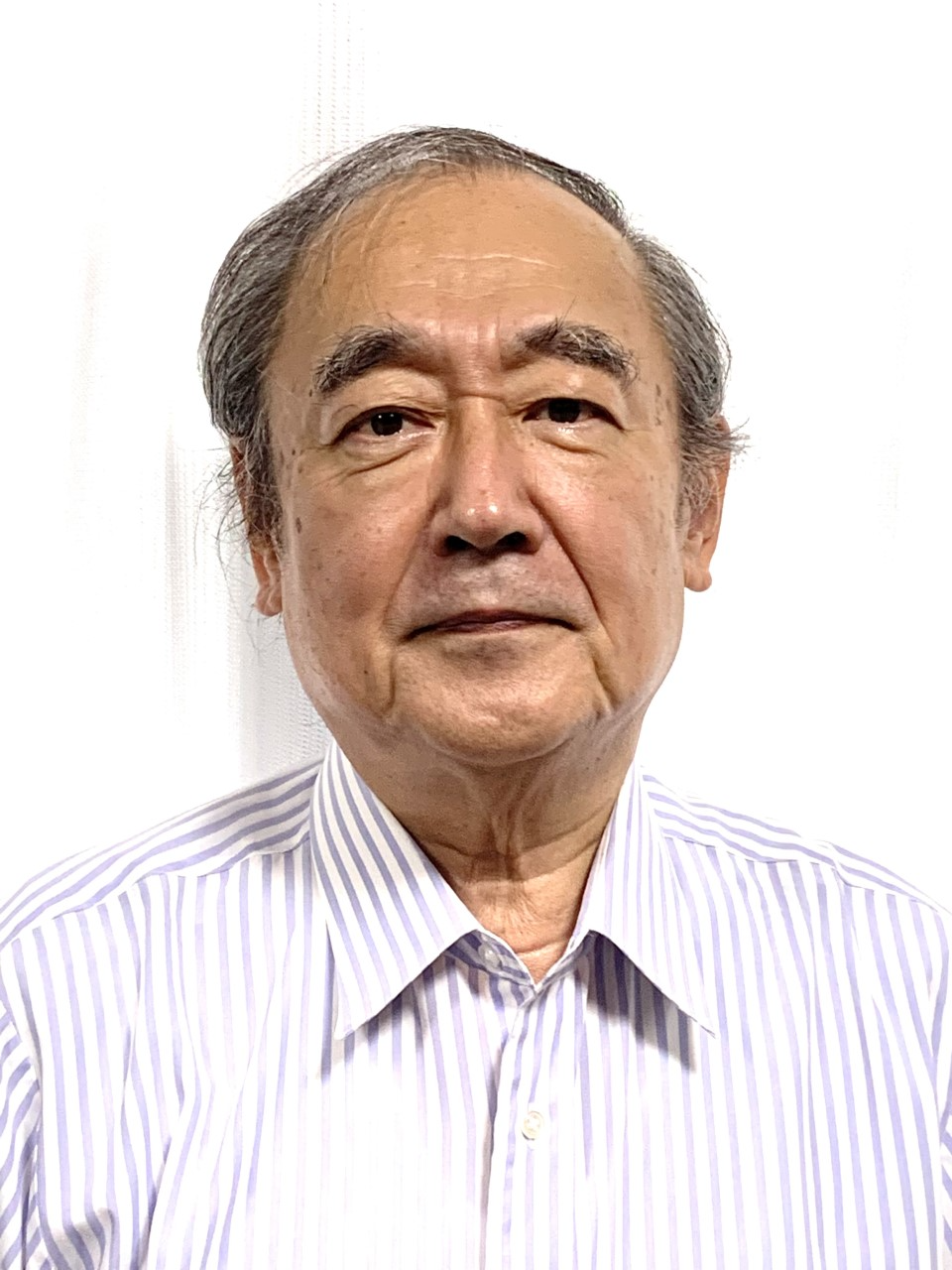
When computer was invented in 1943, it was the machine to “compute” something. The form of the computer has been changed. Starting from the computer for the company use, the notion of personal computer has appeared. In the last decade, smartphone, tablet and IOT devices have become popular. The amount of computing power of smartphone is truly astounding and is expected to become more powerful in near future.
The way we interact with computers has also been changed. Smartphone has enabled all sorts of amazing new human-computer interactions, all in the palm of your hand. Virtual Reality (VR) / Augmented Reality (AR) headsets have also appeared. Interfaces will no longer be trapped in 2D screens but will inhabit our own 3D world. These will come with a completely new set of human-computer interactions.
We are conducting the research to fuse the virtual world and the real world by mainly using the technology of AR. As an application domain, we are focusing on the next generation of E-commerce service. I would like to explain our recent research activities in this talk.
Biography:
Dr. Jiro Tanaka has been a Professor, Graduate School of Information, Production and Systems, Waseda University since 2016. His research interest is Human-Computer Interaction, especially X Reality (XR or Cross Reality). XR is defined as a form of "mixed reality" environment that comes from the fusion of real worlds and online virtual worlds. He received a BSc and a MSc from University of Tokyo in 1975 and 1977. He received a PhD in Computer Science from University of Utah in 1984. From 1984 to 1992, he worked at International Institute for Advanced Study of Social Information Science, Fujitsu Limited. From 1993 to 2016, he worked at Department of Computer Science, University of Tsukuba as an Associate Professor and a Professor. He is a member of ACM, IEEE and IPSJ.
|
|
11:00-12:00
Show/Hide
|
Invited Talk 2
[Chair: Dr. Junko TAKAHASHI]
Title: Miniaturized medical device technology and development of clinical adaptation
Mr. Yu FURUHATA, President and CEO
(AcroBio Corporation, Japan)
Speech Overview:
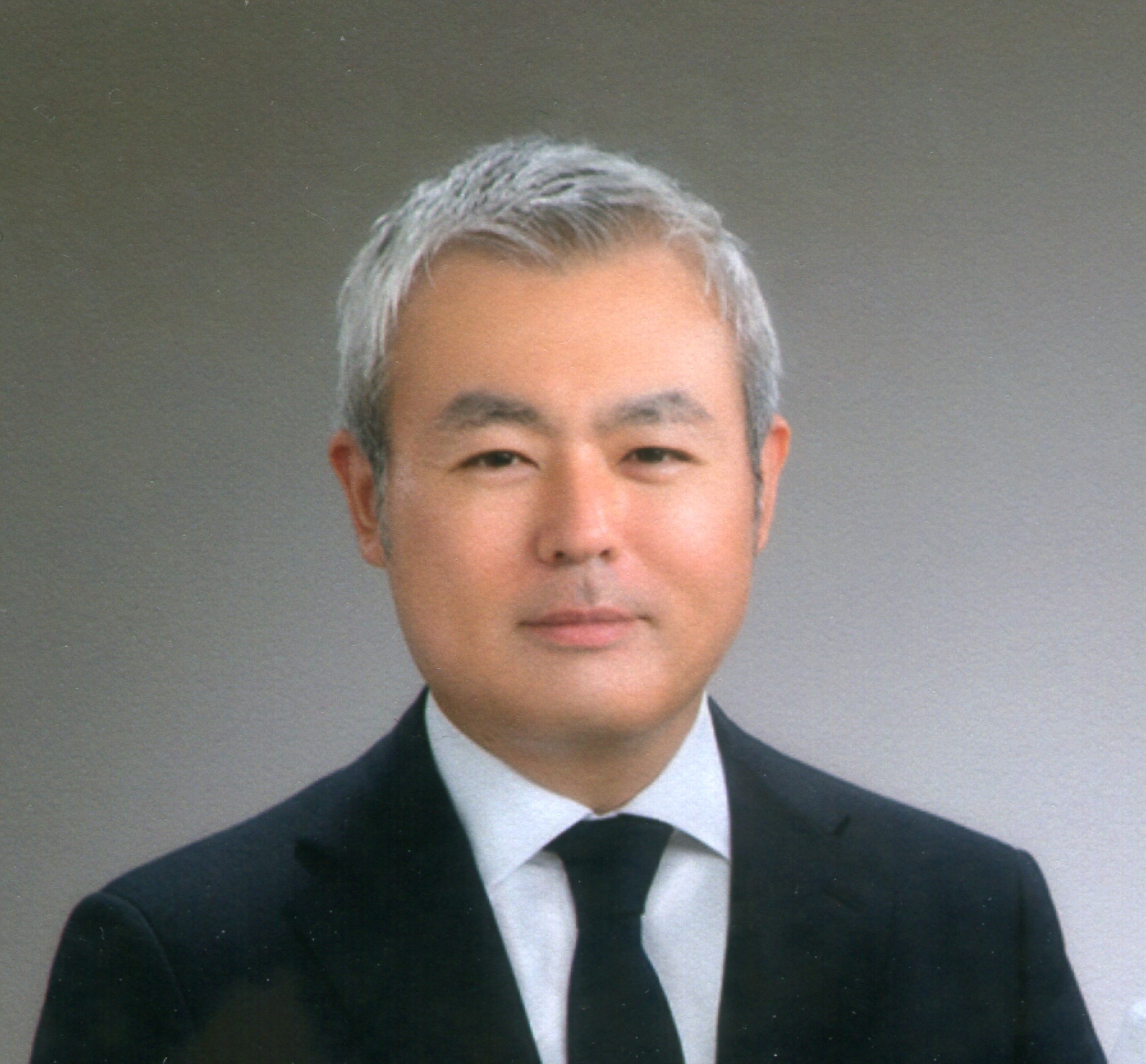
Radiation therapy is one of the standard curative cancer treatments along with surgery and chemotherapy, selectable either exclusively or in combination with the others and remarkably the development enhancing treatment effect by radio sensitizing agent, 5-ALA is expecting to accelerate better clinical outcome without side effects. Miniaturization is the key technological component in development for radiation therapy when it is applied for interstitial or intracavitary brachytherapy that radioactive isotopes are traditionally employed since the size of source material may ideally be designed as small as possible. In the early 2000, the company called Xoft microtube first developed miniaturized X-ray tube to be used for vascular brachytherapy and later transitioned to breast cancer treatment in their first clearance of the regulatory approval from FDA in 2005 and continuously expand the cancer disease sites to gynecological, superficial, brain, colorectal and prostate. It is observed outstanding possibilities to explore more opportunities in development of clinical adaptations further the technology meets clinical demands. On the other hand, there are many challenges for realization of the technologies and products into the market complying medical device regulations comprehensively covering quality, safety and efficacy. Healthcare industry is glowing its opportunities in the matured society and exploring more technology improvements maximizing quality of life for longer live expectancy.
Biography:
Yu Furuhata received a Bachelor of Business Administration from Aoyama Gakuin University, founded AcroBio Corporation in 2006 as president and chief executive officer, bringing with him 22 years of experience in leading radiation technology and physics in dosimetry, medical imaging and cancer care. Since 2018 he has been engaging various projects both inside and outside the company for the medical devices with miniaturized X-ray source recognized as electronic brachytherapy, minimize shielded settings comparing to traditional radioactive isotopes and maximize targeted cancer treatment for patients sparing healthy tissue surrounding tumor site directly radiation can be applied.
|
12:00-13:00 |
LUNCH |
|---|
|
13:00-14:00
Show/Hide
|
*** CANCELLED *** Invited Talk 3
[Chair: Dr. Osamu YOSHIE]
(Zoom Webinar only Zoom Webinar P2)
Title: New educational style for STEM
Mr. Kamal BATRA, Senior Director PTC Education for Asia, MEA, ANZ, Eastern Europe
(PTC, Asia)
Speech Overview:
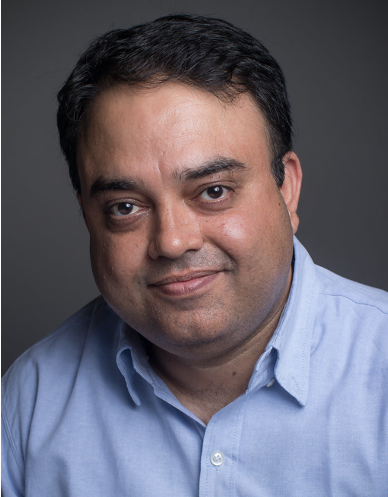
How PTC Software usage is helping STEM educators and students in new Covid reality distance education world.
Biography:
Experience: 26 Years
Enabling Fresher, students, individuals and organizations alike to use PTC technology effectively including traditional classroom training, online courses, as well as custom corporate learning programs, and mentoring.
His responsibilities include ensuring widespread adoption of PTC products and he works with corporate, Governments and Academia to ensure the same.
Developed learning solutions for country wide vocational training, development agencies of the United Nations, renowned Management Schools likes Harvard University, global banking organizations, telecom companies, academic Institutes Hi-Tech firms, and various K-12 customers.
Contributing to significant improvements in overall capacity development and talent building while working with governments and agencies.
.
|
|
14:00-14:15
|
PAUSE
|
|
14:15-15:45
|
PARALLEL SESSIONS "C1" AND "D1"
Session C1: Oral presentations
(Zoom meeting C)
Show/Hide
Session Chairs: Professor Masahide INUISHI (Waseda University, Japan) and Professor Tomonori IIZUKA (Waseda University, Japan)
C1-1:
Segmentation of COVID-19 Lesions on CT Images via an Unsupervised Method
Yufeng Wang, Pengcheng Wu, Rui Xu and Xinchen Ye
(Dalian University of Technology)
C1-2:
Detection System Based on Camera of Nursing Wheelchair Assistance System
Yichen Wang and Harutoshi Ogai
(Waseda University)
C1-3:
3D Human Motion Acquisition and Evaluation System for Remote Rehabilitation and Exercise Based on Kinect and Openpose
Yu You, Tai-Qi Wang and Eiichiro Tanaka
(Waseda University)
C1-4:
S3GI: Semi-Supervised Semantic-Guided Illumination Learning for High-Efficient Low-Light Image Enhancement
Xiaomei Feng, Qi Jia, Long Ma, Yu Liu, Risheng Liu and Xin Fan
(Dalian University of Technology)
C1-5:
A 15-GHz-Band Self-Biased VCO IC with Novel Feedback Circuit in 45-nm CMOS SOI
Mengchu Fang and Toshihiko Yoshimasu
(Waseda University)
C1-6:
Deep Multi-Illumination Fusion for Low-Light Image Enhancement
Wei Zhong, Jie Lin, Long Ma, Risheng Liu and Xin Fan
(Dalian University of Technology)
Session D1: Posters, demos, videos
(Zoom meeting D)
Show/Hide
Session Chairs: Professor Takashi OHSAWA (Waseda University, Japan) and Professor Takaaki KAKITSUKA (Waseda University, Japan)
D1-1:
A Study on Stress Relaxation Structure of SiC Power Module Packaging by Using Ni micro Plating Bonding
Takumi Hirose
(Waseda University)
D1-2:
Collaborative Framework for Layout Decomposition and Mask Optimization
Shuxiang Hu
(Dalian University of Technology)
D1-3:
An Inverter-Based True Random Number Generator with Self-Clock-Tuning
Xingyu Wang and Hirofumi Shinohara
(Waseda University)
D1-4:
Comparison of Sensor Position for Abnormal Gait Detector using an Inertial Measurement Unit
Go Eto1, Ibai Fernandez1, Kodai Kitagawa1, Siti Ahmad2 and Chikamune Wada1
(1Kyushu Institute of Technology)
(2Universiti Putra Malaysia)
D1-5:
A MEMS Capacitance Varying Charge Pump Enabling High-voltage Generation with Exponential Stage-number Dependence
Menghan Song and Tamio Ikehashi
(Waseda University)
D1-6:
A Side-Channel Attack Resilient Strong PUF
Xuanzhen Wang, Kunyang Liu and Hirofumi Shinohara
(Waseda University)
|
|
15:45-16:00
|
PAUSE
|
|
16:00-17:30
|
PARALLEL SESSIONS "C2" AND "D2"
Session C2: Posters, demos, videos
(Zoom meeting C)
Show/Hide
Session Chairs: Professor Yves LEPAGE (Waseda University, Japan) and Professor Jun WU (Waseda University, Japan)
C2-1:
Study on Tactile Tile Detection Algorithm for Walking Guidance System on Nighttime Crosswalks
Shinji Eto and Chikamune Wada
(Kyushu Institute of Technology )
C2-2:
Keyphrase generation by Utilizing Prior Summarization and BART Finetuning
Diya A and Mizuho Iwaihara
(Waseda University)
C2-3:
Architecture Search based Attentive Deformable Feature Alignment Network for Video Deraining
Xinwei Xue and Xiangyu Meng
(Dalian University of Technology)
C2-4:
Multi-Label Text Classification Using Only Label Names
Rongbo Zhang, Zhewei Xu and Mizuho Iwaihara
(Waseda University)
C2-5:
Early Faults Feature Extraction of Rolling Bearings Based on Optimized VMD
Ao Guo, Yiping Feng, Yong Wang and Zhaoxi Hong
(Zhejiang University)
C2-6:
Speech Recognition System Based on Deep Learning for Upper-limb Assistance and Rehabilitation System Control
Zhonghao Wang, Eiichiro Tanaka and Taiqi Wang
(Waseda University)
Session D2: Posters, demos, videos
(Zoom meeting D)
Show/Hide
Session Chairs: Professor Hee-Hyol LEE (Waseda University, Japan) and Professor Tomonori IIZUKA (Waseda University, Japan)
D2-1:
A Microseismometer with Electrically Tunable Resonance Frequency
Jun Wu and Tamio Ikehashi
(Waseda University)
D2-2:
Evaluation of Spine Fixation via Spinal Orthosis during Picking-up Motion using Wearable Flex Sensor
Tatsuya Onishi1, Ibai Gorordo Fernandez1, Kodai Kitagawa1, Yuji Katae2, Naoki Chijiwa3, Takahito Oda3, Aki Kuwazono3, Hisashi Arizono3 and Chikamune Wada1
(1Kyushu Institute)
(2Katae Orthopaedic and Rheumatology)
(3Arizono orthopedic supplies co., ltd)
D2-3:
Sign Language Recognition System Based on Hand Coordinate Detection by Motion Capture
Yinxuan Liu, Renzhong Qian and Shigeyuki Tateno
(Waseda University)
D2-4:
Movement Guidance Device in Indoor Environment using Inertial Sensor
Haoran Wang, Ibai Gorordo Fernandez, Kodai Kitagawa and Chikamune Wada
(Kyushu Institute of Technology )
D2-5:
A Novel Convolutional Neural Network with Adaptive Receptive Field for 3D Object Detection from LiDAR Point Cloud
Yutian Wu and Harutoshi Ogai
(Waseda University)
D2-6:
Development of human monitoring system using thermal array sensor
Ryo Ishizuka, Hayato Fukunaga and Shigeyuki Tateno
(Waseda University)
|
|
17:30-18:00
|
PAUSE AND JURY FOR SESSION BEST PRESENTATION AWARDS
|
|
18:00-19:00
|
CLOSING CEREMONY / ANNOUNCEMENT OF SESSION BEST PRESENTATION AWARDS
(Zoom meeting Closing)
|