|
09:00-
|
On-Site Room and Zoom Webinar Open
(KSRP Media Centre, Tele-Lecture 1F, Room 1 / Zoom Webinar P1)
|
|
09:10-09:20
|
Opening Ceremony
[MC: Dr. Yves LEPAGE]
Dr. Shigeru FUJIMURA, Professor
(Dean, Graduate School of Information, Production and Systems, Waseda University, Japan)
|
|
9:20-9:30
|
PAUSE
|
|
09:30-10:30
Show/Hide
|
Keynote Speech
[Chair: Dr. Eiichiro TANAKA]
Title : "Bioiontronic devices for interactive communication with biology"
Dr. Takeo MIYAKE, Associate Professor
(Graduate School of Information, Production and Systems, Waseda University, Japan)
Speech Overview:
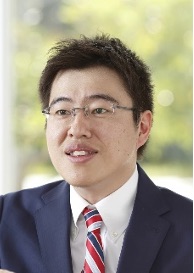
Our research interests and goals are dedicated to nano-bio electronics, specifically biocompatible electronics for medical implants and electrical therapy, based on bio-inspired/mimetic engineering and integrated top-down and bottom-up nanofabrication. Our research focuses on “bioiontronics (bioelectronics + ionics)”, based on sophisticated ion control for interactive communication with biology. Ionic species dominate biological signaling in nature, so converting biochemical ionic signals into electronic signals and stimulating biological system with ions and biochemicals are an emerging technique in the nano-biofields.
Biography:
Takeo Miyake, Ph.D., is an Associate Professor of Graduate School of Information, Production and Systems at Waseda University. He graduated B.S. in Electrical Engineering in 2004, and then received the Ph.D. in Nanoscience and Nanoengineering in 2008 from Waseda University, working in Prof. Ohdomari’s and Prof. Tanii’s groups. He was selected for the young scientist program from the Japanese Society for the Promotion of Science. In 2009, he joined Tohoku University as an assistant professor in the Department of Bioengineering and Robotics, working with Prof. Nishizawa. He then moved to the US and joined the research group of Professor Marco Rolandi in Materials Science and Engineering at University of Washington (2014-2016) and in Electrical Engineering at University of California, Santa Cruz (2015-2016). In 2016, he started his independent academic career in Waseda University.
|
|
10:30-11:30
Show/Hide
|
Invited Talk 1
[Chair: Dr. Eiichiro TANAKA]
Title: "Catastrophe Theory for Machine Learning Security"
Dr. Gaolei LI, Assistant Professor
(Shanghai Jiao Tong University, China)
Speech Overview:

Machine learning has become the current trend for small enterprises or end-users for using intelligent technologies by purchasing the computing services from cloud/edge providers. With such a solution, the cost of model training can be significantly reduced. However, the interpretability and security of machine learning have restricted its further development. To solve those problems, the most important thing is to find a fundamental theory to quantitatively evaluate the change laws of model behavior. For catastrophic changes from real data to labels, we should give the critical point and validate its correctness. In this talk, we will discuss a cusp catastrophe-based interpretable model privacy preservation (CC-IMPP) mechanism, which can proactively block attackers to obtain raw data, mitigate adversarial attacks, and detect the model backdoors by regulating the model weights.
Biography:
Gaolei Li (S’16) received the B.S. degree in electronic information engineering from Sichuan University, Chengdu, China, and PhD degree in Cyber Security from Shanghai Jiao Tong University, Shanghai, China. From Oct. 2018 to Sep. 2019, he visited the Muroran Institution of Technology, Muroran, Japan, supported by the China Scholarship Council Program. Now, he is an Assistant Professor in School of Electronic Information and Electrical Engineering, Shanghai Jiao Tong University, Shanghai, China. His research interests include cyber security, machine learning and privacy protection. He has received best paper awards from the IEEE IEEE ComSoc CSIM Committee and student travel grant award for IEEE Globecom. He is a reviewer for IEEE TDSC, TII, NL, and TPC member for IEEE iThings 2016-2019, IEEE ICC 2018, IEEE ISPA2020, ScalCom 2020&2021.
|
|
11:30-12:00
|
OVERVIEW OF SYMPOSIUM SCHEDULE
Dr. Yves LEPAGE, Professor
(Graduate School of Information, Production and Systems, Waseda University, Japan)
|
|
12:00-13:00
|
LUNCH
|
|
13:00-14:30
|
PARALLEL SESSIONS "A1" AND "B1"
Session A1
(Zoom meeting A)
Show/Hide
Session Chairs: Professor Osamu YOSHIE (Waseda University, Japan) and Professor Koichi SHIMIZU (Waseda University, Japan)
A1-1:
Characteristics of MCF based Optical SDM MIMO Network with Optical Switches
Jing JIANG, Makoto TSUBOKAWA
(Waseda University, Japan)
A1-2:
Highly Birefringent Microfiber with Bowtie-cores
Weinan FENG, Makoto TSUBOKAWA
(Waseda University, Japan)
A1-3:
Accuracy Improvement of Order Quantity Forecasting on E-commerce Sales using Hybrid Method
Yuxi ZHANG, Shigeru FUJIMURA
(Waseda University, Japan)
A1-4:
Research on Enhancing Consensus Mechanism for Blockchain
Jiancang TIAN1, Keiichi KOYANAGI1, Baocang WANG2
(1Waseda University, Japan)
(2Xidian University, China)
A1-5:
Blockchain Privacy Protection Scheme Based on Pedersen Commitment and Ring Signature
Jinyue XU, Keiichi KOYANAGI
(Waseda University, Japan)
Session B1
(Zoom meeting B)
Show/Hide
Session Chairs: Professor Sei-Ichiro KAMATA (Waseda University, Japan) and Professor Shinji KIMURA (Waseda University, Japan)
B1-1:
A Laplacian SVM based Semi-Supervised Classification using Multi-Local Linear Model
Yanni REN, Huilin ZHU, Jinglu HU
(Waseda University, Japan)
B1-2:
SVR with Quasi-linear Kernel for Regression with Missing Data
Huilin ZHU, Yanni REN, Jinglu HU
(Waseda University, Japan)
B1-3:
Process Time Series Prediction Based on Robust Twin Support Vector Regression with Huber Pinball Loss
Wenxiu FENG, Shigeru FUJIMURA
(Waseda University, Japan)
B1-4:
All-in-one Approach to Solve Multiple Pickers Routing Problem
Hanny Prastya HARIYADI, Shigeru FUJIMURA
(Waseda University, Japan)
B1-5:
Multi-layer Feature Extraction with Convolutional Dictionary Learning based on L1 Norm Error with Smoothed L0 Norm Regularization and Non-negative Coefficients
Kaede KUMAMOTO, Yoshimitsu KUROKI
(National Institute of Technology, Kurume College, Japan)
|
|
14:30-14:45
|
PAUSE
|
|
14:45-16:15
|
PARALLEL SESSIONS "A2" AND "B2"
Session A2
(Zoom meeting A)
Show/Hide
Session Chairs: Professor Takafumi MATSUMARU (Waseda University, Japan) and Professor Kohei TATSUMI (Waseda University, Japan)
A2-1:
New Technique for Depth Estimation with Blurred 2D Transillumination Image Using Focus-stacking Method
Sihan XIAN, Yingdong CHEN, Koichi SHIMIZU
(Waseda University, Japan)
A2-2:
A Recognition Method of Narrow Path for Path Planning
Huang YUAN, Hee-Hyol LEE
(Waseda University, Japan)
A2-3:
Splitting D* lite Path Planning in Wide Fire Area for Rescue Robots
Shin-nyeong HEO, Hee-hyol LEE
(Waseda University, Japan)
A2-4:
Development of Upper-limb Assistance-Rehabilitation System Based on Logistic Regression and Unity3D
Taiqi WANG, Lining LI, Huiyuan DUAN, Eiichiro TANAKA
(Waseda University, Japan)
A2-5:
A Novel Method for Calculate Dirt Coverage of Camera in Autonomous Driving
Yucheng ZHANG, Harutoshi OGAI
(Waseda University, Japan)
A2-6:
Heat Stroke Prevention System for Stroller
Ryo TAKEUCHI
(Kyushu Institute of Technology, Japan)
Session B2
(Zoom meeting B)
Show/Hide
Session Chairs: Professor Hirofumi SHINOHARA (Waseda University, Japan) and Professor Tamio IKEHASHI (Waseda University, Japan)
B2-1:
Single Analog Voltage-Tuned Low-Power Wideband VCO IC in 45-nm CMOS SOI
Mengchu FANG, Yunpu ZHANG, Wenjuan GE, Toshihiko YOSHIMASU
(Waseda University, Japan)
B2-2:
Fast Analog Neuromorphic In-memory Classifier with Novel Flash Memory Array Architecture
Hanzhi XUN, Kosuke KATAYAMA, Takashi OHSAWA
(Waseda University, Japan)
B2-3:
A Novel Processing Element for Adder-net on FPGA
Ke MA, Shinji KIMURA
(Waseda University, Japan)
B2-4:
Majority-Inverter Graphs Functional Rewriting using Dynamic Programming
Xianliang GE, Shinji KIMURA
(Waseda University, Japan)
B2-5:
Influence of Device Fluctuations on Accuracy of BNN Crossbar Array
Zian CHEN, Kosuke KATAYAMA, Takashi OHSAWA
(Waseda University, Japan)
|
|
16:15-16:30
|
PAUSE
|
|
16:30-18:00
|
PARALLEL SESSIONS "A3" AND "B3"
Session A3
(Zoom meeting A)
Show/Hide
Session Chairs: Professor Hee-Hyol LEE (Waseda University, Japan) and Professor Makoto TSUBOKAWA (Waseda University, Japan)
A3-1:
Estimating Sentential Coverage for Example-oriented Sentence Retrieval
Yuan LIU, Yves LEPAGE
(Waseda University, Japan)
A3-2:
Worker Assignment Problem with Time Window
Haruka KODAMA, Shigeru FUJIMURA
(Waseda University, Japan)
A3-3:
Question Answering Task : Improvement and Suggestions for the Evaluation of Question Generation with a JointQA Model
Kyoshiro TAKESHITA, Yves LEPAGE
(Waseda University, Japan)
A3-4:
Link Prediction for Wikipedia Articles Based on Temporal Graph Embedding
Jiaji MA, Mizuho IWAIHARA
(Waseda University, Japan)
A3-5:
Rare Data Augmentation for Audio Event Detection based on Generative Adversarial Network
Zifeng ZHAO, Han LIN, Xuanpeng LI
(Southeast University, China)
Session B3
(Zoom meeting B)
Show/Hide
Session Chairs: Professor Toshihiko YOSHIMASU (Waseda University, Japan) and Professor Kosuke KATAYAMA (Waseda University, Japan)
B3-1:
A Mode Localized Tilt Sensor with Ultra-small Stiffness Spring
Zhiqiang CHEN, Tamio IKEHASHI
(Waseda University, Japan)
B3-2:
Design of Mode Size Converter on SOI Waveguide for Improvement of Coupling Efficiency and Misalignment Tolerance with Single-mode Fiber
Liang DONG, Deji LI, Kiyoto TAKAHATA
(Waseda University, Japan)
B3-3:
Energy-efficient 8 Bits Von Neumann with Waiting Strategy Post-Processing Technique for True Random Number Generators
Ruilin ZHANG, Hirofumi SHINOHARA
(Waseda University, Japan)
B3-4:
An Inverter-Based True Random Number Generator with 4-bit Von-Neumann Post-Processing Circuit
Xingyu WANG, Hirofumi SHINOHARA
(Waseda University, Japan)
B3-5:
Design of a Compact Silicon Electro-Optic Modulator Based-on Indium-Tin-Oxide Integrated Directional Coupler with Subwavelength Gratings
Hanzhi CHEN, Kaihang LU, Takaaki KAKITSUKA, Kiyoto TAKAHATA
(Waseda University, Japan)
B3-6:
A Hybrid SRAM PUF with HCI-Based Stability Reinforcement
Kunyang LIU, Hirofumi SHINOHARA
(Waseda University, Japan)
|
|
09:45-
|
On-Site Room and Zoom Webinar Open
(KSRP Media Centre, Tele-Lecture 1F, Room 1 / Zoom Webinar P2)
|
|
10:00-11:00
Show/Hide
|
Invited Talk 2
[Chair: Dr. Eiichiro TANAKA]
Title: "Recent Development of Neuromorphic AI Hardware"
Dr. Hirofumi TANAKA, Professor
(Graduate School of Life Science and Systems Engineering, Kyushu Institute of Technology (Kyutech), Japan)
Speech Overview:
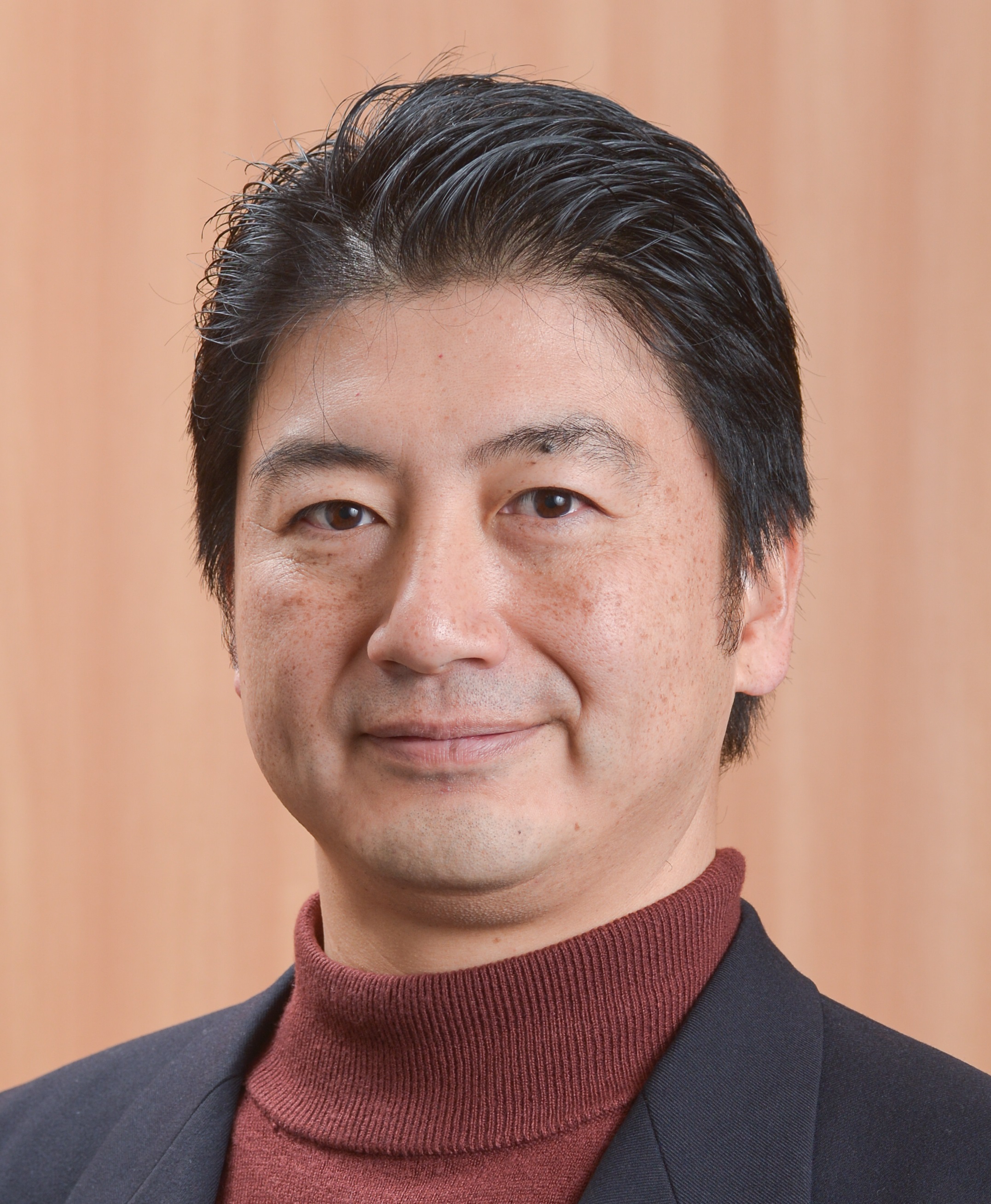
Physical reservoir computing (RC) has been studied to implement artificial intelligence in terms of low power consumption for effective artificial intelligence (AI) systems. Some physical systems will become candidates as physical RC devices; nanomaterial, spintronics, and optoelectronics. An atomic switch network with an Ag2S nanowire network has been reported to be conducted waveform generation task. However, Ag2S is unstable at high temperature to cause of low accuracy in learning results. To overcome the problem, we focus on Ag2Se nanowire because of the similar atomic switch phenomenon with Ag2S and higher temperature endurance than Ag2S. In this study, we also check the neuromorphic behavior using random network consist of SWNT/polyoxometalate. We demonstrated the classification of the robot hand while grabbing the materials. At the presentation, the recent development of the neuromorphic device is also introduced together with the activity of the Research Center for Neuromorphic AI Hardware founded in this year.
Biography:
Prof. Tanaka completed his doctorate in materials science at Osaka University in 1999. Next, he obtained the position of Special Doctoral Researcher in RIKEN under Prof. M. Aono. He moved to the Pennsylvania State University under Prof. Paul Weiss (presently UCLA, chief editor of ACS Nano) as a postdoc researcher in 2002. He then joined the Research Center for molecular-scale nanoscience at the Institute for Molecular Science in 2003 under Prof. T. Ogawa as an assistant professor, where he directed research in molecular electronics using carbon nanotube electrodes. He found that gold nanoparticles can switch to metallic conduction of single-walled carbon nanotubes (SWNT) to semiconducting simply by nanoparticle adsorption. This work led to the development of molecular electronics to study electrical properties affected by interactions between molecular nanoparticles and SWNT or graphene nanoribbon. He had also focused on the development of atomic switches, exploring the ultimate miniaturization of electrical switches, and controlled by photo irradiation 2004-2008 in a key technology project of the Ministry of Education, Culture, Sports, Science and Technology (MEXT) and receive an excellent journal award from Japan Society of Applied Physics in 2012. After moving to Osaka University in 2008, he focused on graphene nanoribbons as electrical wires. He moved to the Department of Human Intelligence Systems, Graduate School of Life Science and Systems Engineering, Kyushu Institute of Technology as a full professor in April 2014 and is focusing on bio-mimic and/or neuromorphic electric nanodevices. In 2018, his work on neuromorphic behavior in a random network consist of SWNT and polyoxometalate was published in Nature Communications and selected as the top read 50 in physics published in Nat. Commun. in 2018.
|
|
11:00-12:00
Show/Hide
|
Invited Talk 3
[Chair: Dr. Eiichiro TANAKA]
Title: "In-warehouse transport AGV supporting Next-Generation Logistics"
Keisuke HANO, (B.E.), Technical Assistant
(Kitakyushu National College of Technology, Japan)
Speech Overview:
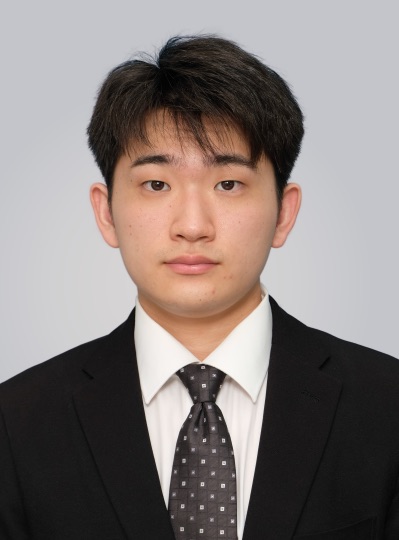
With the rapid development of the Internet, the EC market is expanding dramatically. For this reason, the importance of logistics is becoming higher and higher. Nevertheless, the burden on workers is getting enormous since the progression of an ageing society. "Total Automation" is one of the solutions for these issues. However, it is challenging to introduce total automation to the chaotic logistics site in terms of cost and composition. " cooperation of workers and robots " is a key to solving the issues left in domestic third party logistics. The speaker will show the in-warehouse transport AGV, that created based on the experience of the Roboconist and the Social implementation researches in KOSEN.
Biography:
Keisuke Hano received the B.E. from National Institute of Technology (KOSEN), Kitakyushu in 2020. He researched the Social robot which can be used as smart device in Nanyang Polytechnic, Singapore in 2017. And circuit evaluation system using image processing in Esslingen university of Applied Science in Goeppingen, Germany in 2018 to 2019. He is studying for M.E. as Four Plus One Program in King Mongkut's Institute of Technology Ladkrabang, Bangkok, Thailand. However, since the impact of COVID-19, he is researching in KOSEN, Kitakyushu as technical assistant. His research interests include image processing and Social Robot.
|
12:00-13:00 |
LUNCH |
|---|
|
13:00-14:30
|
PARALLEL SESSIONS "C1" AND "D1"
Session C1
(Zoom meeting C)
Show/Hide
Session Chairs: Professor Jinglu HU (Waseda University, Japan) and Professor Mizuho IWAIHARA (Waseda University, Japan)
C1-1:
Leveraging Related Languages for the Translation of a Low-resourced Language Pair: Manipuri to English
Rudali HUIDROM, Yves LEPAGE
(Waseda University, Japan)
C1-2:
Job Shop Scheduling with Deep Reinforcement Learning Based on Shop States and Modified Network
Han ZENG, Shigeru FUJIMURA
(Waseda University, Japan)
C1-3:
Sub-Bands Grouping Recurrent Neural Network for Hyperspectral Image Classification
Weilian ZHOU, Sei-Ichiro KAMATA
(Waseda University, Japan)
C1-4:
Selective Kernel and Motion-emphasized Loss Based Attention-guided CNN for HDR Imaging of Dynamic Scenes
Yipeng DENG1, Qin LIU2, Takeshi IKENAGA1
(1Waseda University, Japan)
(2Nanjing University, China)
C1-5:
A New Belief Propagation Flip Decoder Architecture Based on Neural Network
Yutai SUN1, Leyu ZHANG1, Yifei SHEN1, Wenqing SONG2, Zihao GONG1, Chuan ZHANG1
(1Southeast University, China)
(2Nanjing University, China)
Session D1
(Zoom meeting D)
Show/Hide
Session Chairs: Professor Harutoshi OGAI (Waseda University, Japan) and Professor Hiroshi INUJIMA (Waseda University, Japan)
D1-1:
Long Term Reliability of Nickel Micro-Plating Bonding by Using Resonant Type Fatigue Testing Machine
Xinguang YU, Ryota DOMEN, Isamu MORISAKO, Keiko KOSHIBA, Tomonori IIZUKA, Kohei TATSUMI
(Waseda University, Japan)
D1-2:
Multi-objective Demand Responding Micro Grid Operation With Uncertain Renewable Energy and Load Demand
Sicheng HOU, Tomohiro MURATA
(Waseda University, Japan)
D1-3:
Study of Relation between Muscle Fatigue and Walking Mode Based on NIRS for A Walking Assistive Device
Yukai GONG, Junyan YANG, Eiichiro TANAKA
(Waseda University, Japan)
D1-4:
A Study on Interconnection Technology for Embedded Power Module Using Nickel Micro Plating Bonding (NMPB)
Nobutaka NAKAMARU, Naoki FUKUI, Keiko KOSHIBA, Isamu MORISAKO, Tomonori IIZUKA, Kohei TATSUMI
(Waseda University, Japan)
D1-5:
Estimation of Brachial Artery Vascular Resistance Index in Dialysis Patients via Vascular Access Using Body-conducted Sound Sensor (BCS) and Neural Network
Takeshi JOYASHIKI, Chikamune WADA
(Kyushu Institute of Technology, Japan)
|
|
14:30-14:45
|
PAUSE
|
|
14:45-16:15
|
PARALLEL SESSIONS "C2" AND "D2"
Session C2
(Zoom meeting C)
Show/Hide
Session Chairs: Professor Jiro TANAKA (Waseda University, Japan) and Professor Tomonori IIZUKA (Waseda University, Japan)
C2-1:
Generating the Sentence in the Middle of Two Sentences: a First Step in Text Morphing
Pengjie WANG, Liyan WANG, Yves LEPAGE
(Waseda University, Japan)
C2-2:
Semantic Segmentation Refinement Using Progressive Regional Search
Zitang SUN, Sei-Ichiro KAMATA
(Waseda University, Japan)
C2-3:
Topic- and Context-Focused Extractive Summarization by Fine-tuning BERT and Similarity Calculation
Yiqi SHAO, Mizuho IWAIHARA
(Waseda University, Japan)
C2-4:
Improving Performance of Speech Emotion Recognition for Children’s Speech using Neural Style Transfer
Peni NATASARI1, Ahmad MUSTOFA2, Osamu YOSHIE1
(1Waseda University, Japan)
(2Politeknik Negeri Madura, Indonesia)
C2-5:
LSTM-based Underwater Source Localization
Yurong HU, Liang AN, Nan ZHANG, Yifei HU
(Southeast University, China)
Session D2
(Zoom meeting D)
Show/Hide
Session Chairs: Professor Takeshi IKENAGA (Waseda University, Japan) and Professor Kiyoto TAKAHATA (Waseda University, Japan)
D2-1:
Recognition of Football’s Handball Foul Based on Depth Data in Real-time
Pukun JIA, Takafumi MATSUMARU
(Waseda University, Japan)
D2-2:
Chinese Number Gestures Recognition using Finger Joint Detection and Hand Shape Description
Yingchuang YANG, Takafumi MATSUMARU
(Waseda University, Japan)
D2-3:
A Personalized 3d Virtual Try-on System Using Augmented Reality
Yuhan LIU, Yuzhao LIU, Shihui XU, Jiro TANAKA
(Waseda University, Japan)
D2-4:
Multiple Markers Cooperation With Virtual Markers in Augmented Reality Environment
Kohei OBUCHI, Boyang LIU, Xitong SUN, Jiro TANAKA
(Waseda University, Japan)
D2-5:
FPS-DS-SLAM: A Feature-Point Based Stereo-SLAM for Dynamic Scenes
Shubhendu RANADIVE, Harutoshi OGAI
(Waseda University, Japan)
D2-6:
Virtual Keyboard Based on Eye Movement Recognition
SONG Changjun, ZHU Xudong, SUN Yaohui, WU Jun
(Southeast University, China)
|
|
16:15-17:00
|
PAUSE AND JURY FOR SESSION BEST PRESENTATION AWARDS
|
|
17:00-18:00
|
CLOSING CEREMONY / ANNOUNCEMENT OF SESSION BEST PRESENTATION AWARDS
(Zoom meeting Closing)
|