09:00- |
Registration Opens (1F, KSRP Media Centre) |
|---|
09:10-09:20 |
Opening Ceremony [MC: Dr. Yves LEPAGE] (KSRP Media Centre, Tele-Lecture 1F, Room 1)
Dr. TATSUMI Kohei, Professor (Dean, Graduate School of Information, Production and Systems, Waseda University, Japan)
|
|---|
09:20-09:25 |
Greetings from FAIS (KSRP Media Centre, 1F, Tele-Lecture Room 1)
Dr. MATSUNAGA Morio (President, Foundation for the Advancement of
Industry Science and Technology, Japan)
|
|---|
09:30-10:15 |
Keynote Speech [Chair: Dr. Takashi OHSAWA] (KSRP Media Centre, Tele-Lecture 1F, Room 1) Show/Hide
Title : "From War to Peace in Optical Engineering
- Befriending light scattering for biomedical applications -"
Dr. SHIMIZU Koichi, Professor (Graduate School of Information, Production and Systems, Waseda University, Japan)
Speech Overview :
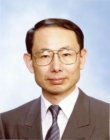 Near-infrared (NIR, 700-1200 nm wavelength) has relatively high transmission through an animal body. However, the light is strongly scattered to make quantitative analysis difficult. We have developed some techniques to control and to suppress the scattering effect. Using these techniques, we can visualize the internal structure of animal bodies with the safe and convenient NIR light. This method has been applied to visualization of internal physiological functions and 3D trans-body imaging. Recently we changed our strategy from conquering the light scattering to befriending it for biomedical applications. As a result, we can now measure the blood turbidity from body surface without sticking the needle for blood sampling.
Biography :
Koichi Shimizu received M.S. (1976) and Ph.D. (1979) degrees, from University of Washington (UW), Seattle, USA. He was Research Associate in UW 1974-79. He was an Assistant Professor, an Associate Professor, and a Professor in Hokkaido University, Sapporo, Japan in 1979-2016. He is currently a Professor Emeritus of Hokkaido University and a Professor of Waseda University, Kitakyushu, Japan. He has been engaged in the studies of biomedical engineering including those of wave propagation in biological media, optical measurement, biotelemetry and biological effects of electromagnetic field. He served as an associate editor of IEEE Trans. ITB in 1999?2007. He has been a Fellow of the Electromagnetics Academy, and an editorial board member of Scientific Reports, Nature. |
|
|---|
10:15-11:00 |
Invited Talk 1 [Chair: Dr. Takashi OHSAWA] (KSRP Media Centre, Tele-Lecture 1F, Room 1) Show/Hide
Title : " Information-Centric Internet of Things: Architecture and Cybersecurity
"
Dr. Jun, WU, Professor (Shanghai Jiao Tong University, China)
Speech Overview :
 With the evolutionary growth of Internet of Things (IoT), it is estimated that almost 50 billion devices will be interconnected by 2020, and the generated data traffic will grow by another 1000 times. In addition, more and more types of contents are processed and transmitted in IoT. The gap between the rapidly growing demands of data rate and existing bandwidth-limited network infrastructures has become ever prominent. As a novel architecture of next generation networks, information-centric networking (ICN) has been introduced as a trend of future IoT. This talk will focus on the architecture and cybersecurity for information-centric IoT (IC-IoT). Firstly, the motivation and development of IC-IoT will be analyzed. Second, the benefits and principles of IC-IoT architecture, including the capabilities of caching, communications, big data analysis and edge intelligence will be discussed. Finally, novel cybersecurity technologies will also be adapted for IC-IoT to enhance the defense capability. To clarify the practical value of IC-IoT, some typical application scenarios of IC-IoT, such as smart grid and internet of vehicle, will be taken as examples for the discussion in this talk.
Biography :
Jun Wu received the Ph.D. degree in information and telecommunication studies from Waseda University, Japan, in 2011. He was a Post-Doctoral Researcher with the Research Institute for Secure Systems, National Institute of Advanced Industrial Science and Technology (AIST), Japan, from 2011 to 2012. He was a Researcher with the Global Information and Telecommunication Institute, Waseda University, Japan, from 2011 to 2013. He is currently an associate professor of School of Electronic Information and Electrical Engineering, Shanghai Jiao Tong University, China. He is also the vice director of National Engineering Laboratory for Information Content Analysis Technology, Shanghai Jiao Tong University, China. He is the chair of IEEE P21451-1-5 Standard Working Group. He has hosted and participated in a lot of research projects including National Natural Science Foundation of China (NFSC), National 863 Plan and 973 Plan of China, Japan Society of the Promotion of Science Projects (JSPS), etc. His research interests include the advanced computing, communications and security techniques of software-defined networks (SDN), information-centric networks (ICN) smart grids, Internet of Things (IoT), 5G, etc., where he has published more than 140 refereed papers. He has been the Track Chair of VTC 2019, 2020 and the TPC Member of more than ten international conferences including ICC, GLOBECOM, WINCON, etc. He has been a Guest Editor of the IEEE Sensors Journal, Sensors, ICT Express. He is an Associate Editor of the IEEE Access, IEEE Networking Letters.
|
|---|
11:00-11:45 |
Invited Talk 2 [Chair: Dr. Takashi OHSAWA] (KSRP Media Centre, 1F, Tele-Lecture Room 1) Show/Hide
Title : "Power Management Units for Energy Harvesting and Biomedical Application"
Dr. CHEN Po-Hung, Associate professor (Institute of Electronics, National Chiao Tung University, Taiwan)
Speech Overview :
 Energy harvesting and biomedical devices are two emerging applications in power management circuit design. Realizing the battery-free system or increasing the battery life by harvesting energy from the environment effectively extends the application level of internet of things. Among various types of transducers, photovoltaic cell and thermoelectric generator achieves relatively high power density and are the promising solutions for battery-less IoT device. On the other hand, implantable medical devices have been commonly employed in the treatment of diseases instead of medication or surgery. Improving the design of power management unit not only improves the battery life but the performance of biomedical devices. This talk will introduce some recent designs of power management unit for energy harvesting and biomedical applications.
Biography :
Po-Hung Chen was born in Hsinchu, Taiwan. He received the M.S. degrees in institute of electronics from National Chiao Tung University, Taiwan, and the Ph.D. degree in electrical engineering from the University of Tokyo, Japan, in 2007, and 2012, respectively.
He studied low-voltage low-power circuit design techniques and startup techniques in energy harvesting power converter during his graduate studies in Tokyo University. In 2011, He was a visiting scholar at the University of California, Berkeley, where he conducted research in fully-integrated power management circuits for RISC-V processor. From 2012, he joined the Institute of Electronics in National Chiao Tung University, where he is now an associate professor.
Dr. Chen research focuses on power management integrated circuits, with special emphasis on energy harvesting, battery management, battery charger, and wireless power transmission. |
|---|
11:45-12:00 |
OVERVIEW OF SYMPOSIUM SCHEDULE (KSRP Media Centre, Tele-Lecture 1F, Room 1)
Dr. Yves LEPAGE, Professor (Graduate School of Information, Production and Systems, Waseda University, Japan)
|
|---|
12:00-13:00 |
LUNCH (IPS, Student lobby) |
|---|
13:00-14:00 |
SEMINAR "ENTREPRENEURS" [Chair: Dr. Kohei TATSUMI] (IPS, Language lab N162) Show/Hide
Title : "Initiatives to support startups "
Mr. OOHITSU Naoto (Executive Officer, Mizuho Bank, Japan)
Speech Overview :
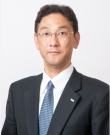 With the rapid development of technology in recent years, the Tokyo Stock Exchange in Japan is also considering a market reorganization for a new era, which is giving a boost to startup IPOs in Japan. In this speech, the experiences of the speakers who arefamiliar with large companies and startups are introduced together with the examples of startupsfrom universities and Chinese entrepreneurs that are familiar to the students. We also introduce Mizuho Financial Group's initiativesto fulfill its role as an ecosystem to support such activities. If you are considering starting a business, please join us. The speech will be in Japanese and there will be an interpreter in Chinese. Materials are written in both English and Japanese.
Biography :
Naoto Oohitsu received the B.A. degrees, from University of Kansei Gakuin,Japan. He entered Mizuho Bankin 1988. After becoming the sales manager of a large store in Tokyo, he has been promoting M&A and new corporate transactions at the head office. He has been involved in business and financial operations in a wide range of industries, from large companies tosmall and mid-sized companies and startups. He was assigned to the General Manager of Innovative Startups Coordination Department in 2016 and assumed the position of Executive Officer in 2018. Supporting Startups for 6 years, and visited over 4,000 Startups for total (covers 40% of Startups in Japan). Forbes JAPAN Entrepreneur Ranking Screening Board (Observer).
|
|---|
13:00-14:00 |
SEMINARS "1" AND "2" (IPS, Student room N104)
Seminar 1 [Chair: Dr. Sei-Ichiro KAMATA] Show/Hide
Title : "Convolutional sparse representation and collaborative researches with Asian institutes"
Prof. KUROKI Yoshimitsu (National Institute of Technology, Kurume College, Japan)
Speech Overview :
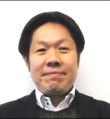 "Convolution" is a key term on signal processing and image recognition. This talk gives a brief introduction of convolutional sparse representation and its advantages compared with the block based sparse representation for video coding and image recognition. The speaker shows some improvements of convolutional sparse representation: fast implementation and a robust dictionary filter learning method against outliers. Furthermore, he introduces examples of collaborative researches with Asian institutes inviting internship students with the support of JASSO.
Biography :
Yoshimitsu Kuroki received his B.E., M.E., and Ph.D. from Kyushu Institute of Technology, Fukuoka, Japan in 1991, 1993, and 1996, respectively. From 1996 to 2001, he worked in Department of Electrical Engineering, National Institute of Technology (KOSEN), Kagoshima College.In 2001, he joined National Institute of Technology (KOSEN), Kurume College and currently is a professor.He was a visiting researcher/lecturer at King Mongkut's Institute of Technology Ladkrabang, Bangkok, Thailand in 2012.His research interests include image compression, image processing, and pattern recognition.He is a member of IEEE, IEICE, IPSJ, ITE, and IIEEJ.
Seminar 2 [Chair: Dr. Yves LEPAGE] Show/Hide
Title : "Go Paperless: Transition to the Digital Age"
Ms. Nancy GAO (Product Marketing Manager, Foxit Software Inc., USA)
Speech Overview :
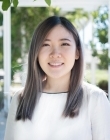 Learning objectives: Discuss how PDF technology can make a major impact on cross vertical industries and solutions. Identify challenges and concerns in paper documents, as well as issues related to digital document security. Summarize client implementations and integrations with PDF technology.
Abstract: When it comes to PDF technology, people tend to overlook the significance and value in it. However, amongst the data revolution currently surrounding our market, PDF technology plays a major role within enterprise solutions. PDF technology is not very complicated, but what can be done with PDF technology is. This session will discuss common challenges our industry struggles with, and how PDF technology becomes the solution to address those concerns. Learn about the costs involved with paper, ROI, client use-cases, digital automation, data scraping, and multi-level integrations that showcase the true enterprise solution that PDF has become today.
Biography :
Nancy is currently a Product Marketing Manager at Foxit Software, where she leads vertical specific solutions within the Insurance, Financial, and Banking industry. She has experience in product management, digital marketing, and vertical marketing within the tech industry to create enterprise solutions across different markets.
|
|---|
14:00-14:30 |
PAUSE |
|---|
14:30-17:40 |
SATELLITE EVENT: WORKSHOP ON BIOIONTRONICS (see programme) (Collaboration Center, conference room M1)
|
|---|
14:30-16:00 |
PARALLEL POSTER SESSIONS "1" AND "2"
Session 1
(IPS, Student computer lab N160)
Show/Hide
Session Chair : Professor Hee-Hyol LEE
(Waseda University, Japan)
P1-1:
An Area-Efficient Elliptic Curve Cryptography Processor with Simple Power Analysis Attack Resistance Over NIST Curve P-256
Chiao-An TSAI, Yun-Wen LU, Hsie-Chia CHANG
(National Chiao Tung University, Taiwan)
P1-2:
Deep Embedding GAN-based Model for Anomaly Detection on High-dimensional Sparse Data
Chaojun WANG1, Yaping DAI1, Wei DAI2
(1Beijing Institute of Technology, China)
(2Allseeing Security, United States of America)
P1-3:
Deterioration Diagnosis Of Bridge Using Machine Learning
Jianyan LIU, Hiroshi INUJIMA, Harutoshi OOGAI
(Waseda University, Japan)
P1-4:
Feasibility verification of a gesture recognition system based on Surface Electromyography signals
Yubin QIN1, Xingjian MA2, Haozhe LIU3
(1Southeast University, China)
(2Xidian University, China)
(3Tianjin University, China)
P1-5:
Interval prediction of electricity price by using Improved Bootstrap method with Envelope-based clustering technique
Sangli LIU, Tomohiro MURATA
(Graduate School of Information, Production and Systems, Waseda University, Japan)
P1-6:
Liver Cancer Diagnosis by Water-gated Organic Field-effect Transistors
Chenfang SUN, Shanshan CHENG, Wenping HU
(Tianjin Key Laboratory of Molecular Optoelectronic Sciences, School of Science, Tianjin University, China)
P1-7:
Research on Motion Sensing Monitoring and State Pattern Analysis Based on Wearable Devices
Zengyuan TU, Shangzhe LI, Teng HUA
(Southeast University, China)
P1-8:
Single Crossbar Array Architecture for High Density and Low Power Artificial Neural Network
Shuchao GAO, Takashi OHSAWA
(Waseda University, Japan)
P1-9:
The impact of incentives on the capacity planning of the closed-loop supply chains
Sofiene BEN SOUISSI, Tomohiro MURATA
(Waseda University, Japan)
P1-10:
Walking Support for the Visually Impaired Using AR/MR and Virtual Braille Block
Katsuya HOMMARU, Jiro TANAKA
(Waseda University, Japan)
Session 2
(IPS, Gallery)
Show/Hide
Session Chair : Professor Shinji KIMURA (Waseda University, Japan)
P2-1:
A Confidence Measure for Disparity Estimation Based on Deep Learning
Hao WANG, Yaping DAI, Linjian JIN
(Beijing Institute of Technology, China)
P2-2:
A new measurement method of transverse piezoelectric coefficient of thin film material based on multilayer cantilever beam structure
Feng LIU, Teng-Yuan ZHANG, Hao GUO, Hao GUO, Zai-Fa ZHOU
(School of Information Science and Engineering, Southeast University, China)
P2-3:
Accurate Data Read from 3D Horizontal ReRAM Crossbar Array
Yuzhao CHANG, Takashi OHSAWA
(Waseda University, Japan)
P2-4:
An Automatic Impedance Matching Program for RF Amplifiers
Yubo SHI, Chenhao TIAN, Yingzhuo SUN, Jiangpeng WANG
(Southeast University, China)
P2-5:
Digital Camera Positioning Algorithm and Parameter Calibration with Targeted Circle
Jinming ZHANG, Chenhao QI
(Southeast University, China)
P2-6:
Effective Dark-Bit Detection Scheme Based on EE SRAM Physically Unclonable Function and VSS Biasing Technique
Kunyang LIU, Hirofumi SHINOHARA
(Waseda University, Japan)
P2-7:
High-efficient molecular delivery into adhesive cells using Au nanotubes
Bowen ZHANG, Kohei SAHARA, Dinuo ZHENG, Takeo MIYAKE
(Waseda University, Graduate School of Information, Production and Systems, Japan)
P2-8:
High-powered enzymatic biofuel cells based on carbon nanotube composite fibers
Sijie YIN, Xiaohan LIU, Takeo MIYAKE
(Waseda University, Japan)
P2-9:
Multi-Task and Multi-Level Detection Neural Network Based Real-Time 3D Pose Estimation
Dingli LUO, Songlin DU, Takeshi IKENAGA
(Waseda University, Japan)
P2-10:
Multi-technology Correction Based 3D Human Pose Estimation for Jump Analysis in Figure Skating
Limao TIAN1, Xina CHENG2, Masaaki HONDA3, Takeshi IKENAGA1
(1Graduate School of Information, Production and Systems, Waseda University, Japan)
(2Graduate School of Artificial Intelligence, Xidian University, China)
(3Graduate School of Sport Sciences, Waseda University, Japan)
|
|---|
16:00-16:30 |
PAUSE |
|---|
16:30-18:00 |
PARALLEL POSTER SESSIONS "3" AND "4"
Session 3
(IPS, Student computer lab N160)
Show/Hide
Session Chair : Professor Takayuki FURUZUKI
(Waseda University, Japan)
P3-1:
A convolutional neural network based method for precise and efficient window-to-wall ratio calculation
Ruyang LIU
(Southeast University, China)
P3-2:
Arithmetic Circuit Homomorphic Encryption Floating point Enhancement
Jun Rong CHAN, Wei Jie SOH, Li Xin TAN, Jing Wei Shannen WEE, Chern Nam YAP
(Temasek Polytechnic, Singapore)
P3-3:
Density-based clustering algorithm for the analysis of polymer nanocomposite
Zhudan CHEN, Dazi LI
(Beijing University of Chemical Technology, China)
P3-4:
Design of a Low Jitter Phase Locked Loop for array TDC
Yawei SUN, Jie PENG, Jin WU
(Southeast University, China)
P3-5:
Distributed auto-encoder based LSTM model for forecasting of equipment status
Xian HU, Yiping FENG, Xinfeng ZHANG, Ge PAN
(Zhejiang University, China)
P3-6:
Dynamic Job Shop Real-Time Scheduling Based on Deep Neural Network Combined with Random Forest
Tuchao ZHANG, Yiping FENG, Zedong PENG, Xuanzhi JIN
(Zhejiang University, China)
P3-7:
Efficient R-LWE Implementation as a Post-Quantum Cryptographic Primitive
Li-Wei LIU1, Luis Diego SOTO UGALDE2, Yun-Wen LU1, Hsie-Chia CHANG1, Chen-Yi LEE1
(1National Chiao Tung University, Taiwan)
(2Katholieke Universiteit Leuven, Belgium)
P3-8:
Enhance Interaction among User and Multiple Markers in Augmented Reality
Ling DU, Shengyu FANG, Jiro TANAKA
(Waseda University, Japan)
P3-9:
Optimization of production planning and scheduling based on fluorine chemical product chain
Haoyu LIU, Yiping FENG, Ruichang GUO
(School of Control Science and Engineering, Zhejiang University, China)
P3-10:
Research on Calculation of Fluorine Production and Sales Based on EEMD-LSTM Multi-scale Combination Forecasting
Ruichang GUO, Yiping FENG, Haoyu LIU, Xuanzhi JIN
(Zhejiang University, China)
Session 4 (IPS, Gallery)
Show/Hide
Session Chair : Associate Professor Takeo MIYAKE
(Waseda University, Japan)
P4-1:
A Portable Gear Surface Diagnostic Device Using Laser Sensor with Manipulator
Jing-Yi XIA, Jyun Rong ZHUANG, Chinn-Yee LIM, Eiichiro TANAKA
(Graduate School of Information, Production and Systems, Waseda University, Japan)
P4-2:
An FPGA-based Convolutional Neural Network with High Dynamic Resource Utilization Using Partial Reconfiguration
Ke MA, Shinji KIMURA
(Waseda University, Japan)
P4-3:
An Interval-based Mapping Algorithm for Multi-shape Tasks on Heterogeneous Reconfigurable FPGA
Tingyu ZHOU, Tieyuan PAN, Takahiro WATANABE
(Waseda University, Japan)
P4-4:
Design an Efficient Power Management System for Hybrid Electric Vehicle
Mohamed Amir Gabir ELBAKRI, Harutoshi OOGAI
(Waseda University, Japan)
P4-5:
Effect of titanium dioxide nanoparticles on optical properties of superhydrophobic coating
Hongyu LI
(Southeast University, China)
P4-6:
Majority-Inverter Graph Optimization Using Widened Selection Window
Xianliang GE, Shinji KIMURA
(Waseda University, Japan)
P4-7:
Novel Vertical GaN Fin Power FETs with p-buried Layers for High Threshold Voltage and Low on-State Resistance
Xinyi TAO, Chi ZHANG, Sheng LI, Siyang LIU, Jiaxing WEI, Weifeng SUN
(Southeast University, China)
P4-8:
Optical signal dynamic analysis and temperature compensation of 2D optical codec access network link monitoring system
Hao GUO
(Southeast University, School of Electronic Science and Engineering, China)
P4-9:
Three dimensional transillumination imaging of human body using near-infrared light -- Attempt for application of deep learning --
To Ni PHAN VAN1, Trung Nghia TRAN2, Koichi SHIMIZU1
(1Waseda University, Japan)
(2Ho Chi Minh City University of Technology - VNU-HCM, Vietnam)
P4-10:
Walking Assistive Device Controlled by Mental and Physical Condition
Jun Yan YANG, Jyun Rong ZHUANG, Guan Yu WU, Eiichiro TANAKA
(Waseda University, Japan)
|
|---|
09:00-12:30 |
SATELLITE EVENT: WORKSHOP ON BIOIONTRONICS (see programme) (Collaboration Center, Conference room M1)
|
|---|
09:00-10:30 |
PARALLEL POSTER SESSIONS "5" AND "6"
Session 5 (IPS, Student computer lab N160)
Show/Hide
Session Chair : Professor Takafumi MATSUMARU
(Waseda University, Japan)
P5-1:
A Thermal-Noise-Amplification Based True Random Number Generator
Xingyu WANG, Hirofumi SHINOHARA
(Waseda University, Japan)
P5-2:
Automatic HamNoSys annotation of video-based Sign Language Corpus using Machine Learning
Victor SKOBOV, Yves LEPAGE
(Graduate School of Information, Production and Systems, Waseda University, Japan)
P5-3:
Generating Emotional Region and Text Representataions for Joint Visual-Textual Sentiment Analysis
Jiayi ZHAO, Mizuho IWAIHARA
(Waseda University, Japan)
P5-4:
High Output Rate 8 Bits Von Neumann with Waiting Post-Processing for True Random Number Generators
Ruilin ZHANG, Hirofumi SHINOHARA
(Waseda University, Japan)
P5-5:
Identifying Topic Evolutionary Patterns Based on Component Decomposition of Temporal Sequence
Yingyi ZHOU, Mizuho IWAIHARA
(Waseda University, Japan)
P5-6:
Music Generation System of Karaoke
Xiao FU, Jinglu HU
(Waseda University, Japan)
P5-7:
Optimal Design and Control of a Four-wheel Steering System for Racing Car
Zihao WANG
(Southeast University, China)
P5-8:
Study of Region-Oriented FPGA Architecture for Very Large-Scale Circuits
Ryota IKAZAKI1, Takahiro WATANABE1, Yiping DONG2
(1Waseda University, Japan)
(2China Key Systems, China)
P5-9:
VIM for FSAE
Ethan TURNER
(Southeast University, China)
P5-10:
Weakly Supervised Multi-label Text Classification
Jiaqi FENG, Mizuho IWAIHARA
(Graduate School of Information, Production and Systems, Waseda University, Japan)
Session 6 (IPS, Gallery)
Show/Hide
Session Chair : Associate Professor Kiyoto TAKAHATA
(Waseda University, Japan)
P6-1:
A Ku Band Low-Power VCO IC with Novel Simplified Feedback Circuit in 40-nm SOI CMOS
Mengchu FANG, Toshihiko YOSHIMASU
(Waseda University, Japan)
P6-2:
A Novel Bootstrap Diode with Improved Reverse Recovery Characteristics in 100V GaN Gate Driver ICs
Yanqin ZOU
(Southeast University, China)
P6-3:
An Efficiency Optimized Wireless Power Transfer System Based on Adaptive Frequency Control
Qian WU, Changyuan CHANG, Hui DING, Yinshi BAI
(Southeast University, China)
P6-4:
Composite Relational Network for Click-Trough Rate Prediction
Hangyu DENG, Yulong WANG, Jinglu HU
(Waseda University, Japan)
P6-5:
Design of a high-precision CV/CC AC - DC converter
Lei WANG, Changyuan CHANG, Lingtao KONG
(Southeast University, China)
P6-6:
Design of two-stage Voltage-controlled Oscillator
Mengfei LI
(Southeast University, China)
P6-7:
GNN-based classification for diabetic retinopathy severity grading
Aiki SAKAGUCHI, Daming LUO, Renjie WU, Sei-Ichiro KAMATA
(Waseda University, Japan)
P6-8:
Multi-layer feature extraction with convolutional dictionary learning
Tomohito MIZOKAMI, Tomoya HIRAKAWA, Yoshimitsu KUROKI
(National Institute of Technology, Kurume College, Japan)
P6-9:
Power Analysis of Array Readout Circuit Based on PLL-TDC
Guan WANG
(Southeast University, China)
P6-10:
Readout Circuit of SiC APD Linear Array Based Periodic Regulation Mode
Peikun WANG
(Southeast University, China)
|
|---|
10:30-11:00 |
PAUSE |
|---|
11:00-12:30 |
PARALLEL POSTER SESSIONS "7" AND "8"
Session 7 (IPS, Student computer lab N160)
Show/Hide
Session Chair : Professor Sei-Ichiro KAMATA
(Waseda University, Japan)
P7-1:
A Survey of Industrial Augmented Reality for Enterprise Digital Transformation
Satoshi GOTO
(PTC Japan Co., Ltd., Japan)
P7-2:
Clothing pressure measurement of a spinal orthosis during picking-up motion using pressure sensor system
Koji SAKAMOTO1, Kodai KITAGAWA1, Yuji KATAE2, Naoki CHIJIWA3, Aki KUWAZONO3, Hisashi ARIZONO3, Chikamune WADA1
(1Kyushu Institute of Technology, Japan)
(2Katae Orthopaedic and Rheumatology, Japan)
(3Arizono Orthopedic Supplies Co., Ltd., Japan)
P7-3:
Decision tree-based model for feet distance estimation during assistive motion
Kodai KITAGAWA1, Takayuki NAGASAKI2, Sota NAKANO3, Mitsumasa HIDA4, Shogo OKAMATSU5, Chikamune WADA1
(1Kyushu Institute of Technology, Japan)
(2Tohoku Bunka Gakuen University, Japan)
(3Kyushu University of Nursing and Social Welfare, Japan)
(4Osaka Kawasaki Rehabilitation University, Japan)
(5Kitakyushu Rehabilitation College, Japan)
P7-4:
Development of New Optical Technique for Noninvasive Measurement of Blood Turbidity
Shiyang LIANG, Koichi SHIMIZU
(Graduate School of Information, Production and Systems, Waseda University, Japan)
P7-5:
Gas-Permeable, Irritation-Free, Transparent Hydrogel Contact Lens Devices with Metal-Coated Nanofiber Mesh for Eye Interfacing
Shiyuan WEI, Rongkang YIN, Xiaojie DUAN
(Peking University, China)
P7-6:
High Temperature Reliability of Bonds Formed by NMPB
Takumi ONODERA, Masayoshi NAKAGAWA, Keiko WADA, Tomonori IIZUKA, Kohei TATSUMI
(Waseda University, Japan)
P7-7:
Research on Flexible Pressure Sensor Based on Carbon Nanotubes
Yuan WO
(Southeast University, China)
P7-8:
Short-term Traffic Flow Forecasting Method using Spatial-temporal Relationship
Kaijie YANG, Shigeru FUJIMURA
(Waseda University, Japan)
P7-9:
Study of Ag micro particle addition in nano-Ni based sintering joints for SiC power device
Tze Jiun CHEN, Yasunori TANAKA, Tomonori IIZUKA, Kohei TATSUMI
(Waseda University, Japan)
P7-10:
Video Fire Smoke Detection Technology in Open Field
Sijia HE, Shigeru FUJIMURA
(Waseda University, Japan)
Session 8 (IPS, Gallery)
Show/Hide
Session Chair : Professor Hiroshi INUJIMA
(Waseda University, Japan)
P8-1:
Adaptive PID Neural Network Control for Quadrotor Subjected to Path Tracking
Powen CHENG, Hee-Hyol LEE
(Waseda University, Taiwan)
P8-2:
Bidirectional optical delay unit for 8-bit sereial-to-parallel conversion
Chenge AO, Ruikang LUO, Kiyoto TAKAHATA
(Waseda University, Japan)
P8-3:
Channel Estimation for Massive MIMO System with Spatial-wideband Effect
Zhenhao JI, Chuan ZHUANG
(Southeast University, China)
P8-4:
Drone-based Parking Space Detection and Navigation
Erxiang XU, Shin Nyeong HEO, Hee-Hyol LEE
(Waseda University, Graduate School of Information, Production and Systems, Japan)
P8-5:
Hand gesture recognition systems based on human body information
Hongbin LIU, Fanxing MENG, Tong LI, Shigeyuki TATENO
(Graduate School of Information, Production and Systems, Waseda University, Japan)
P8-6:
Neural style transfer approach for non-native speech recognition
Kacper RADZIKOWSKI1, Osamu YOSHIE1, Robert NOWAK2
(1Waseda University, Japan)
(2Warsaw University of Technology, Institute of Computer Science, Poland)
P8-7:
New evaluation method of crosstalk penalty for multi-channel transmitters
Siyuan DUAN, Hanzhi CHEN, Kiyoto TAKAHATA
(Waseda University, Japan)
P8-8:
Optimized decoding algorithm for polar and LDPC concatenated codes
Hongxi JIN
(Southeast University, China)
P8-9:
Parallel programming of an ionic floating-gate memory array for neuromorphic computing
Scott T. KEENE1, Elliot J. FULLER2, Armantas MELIANAS1, Zhongrui WANG3, Sapan AGARWAL2, Yiyang LI2, Yaakov TUCHMAN1, Conrad D. JAMES2, Matthew J. MARINELLA2, J. Joshua YANG3, Alberto SALLEO1, A. Alec TALIN2
(1Stanford University Department of Materials Science and Engineering, United States of America)
(2Sandia National Laboratories, United States of America)
(3University of Massachusetts Department of Computer Science and Electrical Engineering, United States of America)
P8-10:
Selecting the best candidate sentence in an EBMT system
Guocheng LI, Yves LEPAGE
(Waseda University, Japan)
|
|---|
12:30-13:15 |
LUNCH (IPS, Student lobby) |
|---|
13:15-14:15 |
SEMINARS "3" AND "4" (IPS, Student room N104)
Seminar 3 [Chair: Dr. Eiichiro TANAKA]Show/Hide
Title : "Development of assistive robots based on musculoskeletal structure"
Prof. FUKAYA Naoki (Tokyo Metropolitan College of Industrial Technology, Japan)
Speech Overview :
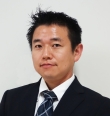 In advanced countries that face an aging society, it is desirable to develop technologies that help elderly person. For this reason, we have developed walking aids that assist elderly people who have difficulty walking, high-performance, easy-to-use powered prosthetic hand, and robotic robot arms for home care. For this purpose, we have focused on human musculoskeletal structures, developed a unique link mechanism that we called harmonic link mechanism to reproduce this feature, and have developed these assist robots. As a result, various operations have been realized with simple control. For example, a powered prosthetic hand can easily grasp various objects such as plastic bottles, cream puffs and small tomatoes without feedback control with only one actuator. In this presentation, we will introduce examples of these structural features and operations.
Seminar 4 [Chair: Dr. Takeshi OHSAWA] Show/Hide
Title : "Memory in Data-Centric Era"
Mr. TAKASE Satoru (Senior Manager, The Institute of Memory Technology Research & Development, KIOXIA Corp., Japan)
Speech Overview :
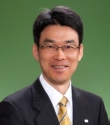 The volume of digital information generated worldwide is increasing dramatically. Towards 2020's, with the emergence of 5G, devices connected will be billions, cloud used by millions, and data must be accessed or processed at even higher rate ever done before. This requires further innovations in existing memory systems. Flash memory has been a key component and continuously improving its performance. The latest 3D flash memory expands the capacity and realizes 1.33Tbit/die in 2019. Also, emerging memories has been discussed in industry and academia to improve the performance and cost of memory systems. In this talk, the recent R&D of memory and its supporting technologies are reviewed and discussed.
Biography :
Satoru Takase is a senior manager at the Institute of Memory Technology Research & Development in KIOXIA Corporation (formerly known as Toshiba Memory Corporation) in Japan. For over 25 years, He has been engaged in R&D of semiconductor memories and micro-processors, including a 32Gbit 3D-ReRAM(ISSCC2013), a 3D BiCS FLASH TM prototype sample and a 1.6-GB/s 16-Bank DRAM (ISSCC1999). Previously, he moved to Austin, TX USA, in 2002 when Toshiba, Sony and IBM joined project to design the CELL processor. He received his BEEE and MEEE from Nagoya University in Japan in 1988 and 1990, respectively.
|
|---|
14:15-14:45 |
PAUSE AND ANNOUNCEMENT OF NOMINATED POSTERS |
|---|
14:45-16:15 |
FLASH PRESENTATION OF NOMINATED POSTERS AND PRIZE SELECTION SESSION (IPS, Gallery) |
|---|
16:15-17:15 |
TEA CEREMONY (IPS, Student lobby) |
|---|
17:15-17:30 |
PAUSE |
|---|
17:30-19:30 |
CLOSING CEREMONY / PRIZE AWARDING SESSION (KSRP Conference Centre) Show/Hide
Welcome toast and banquet
Short speeches by guests
Attraction
Prize awarding
Group photo
|
|---|